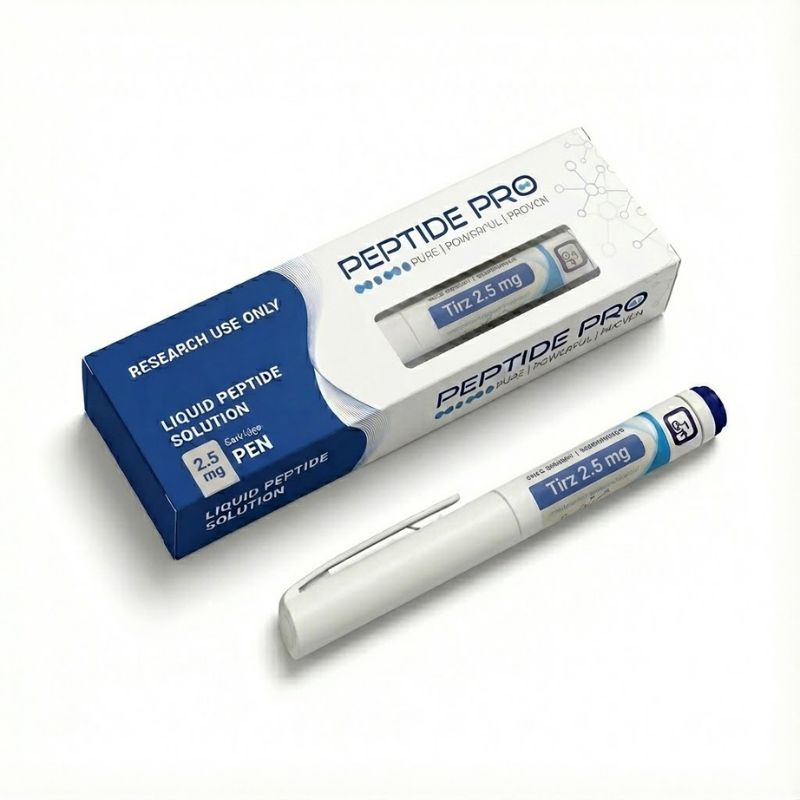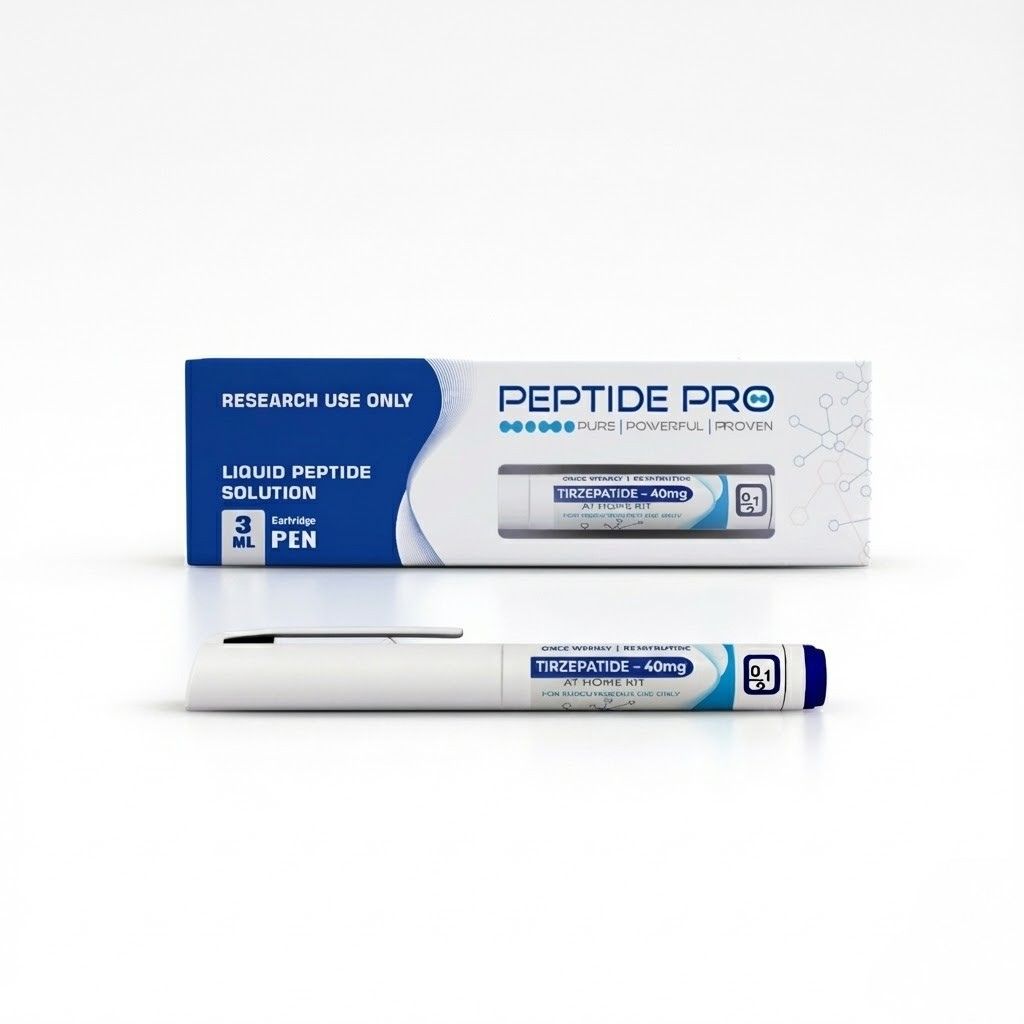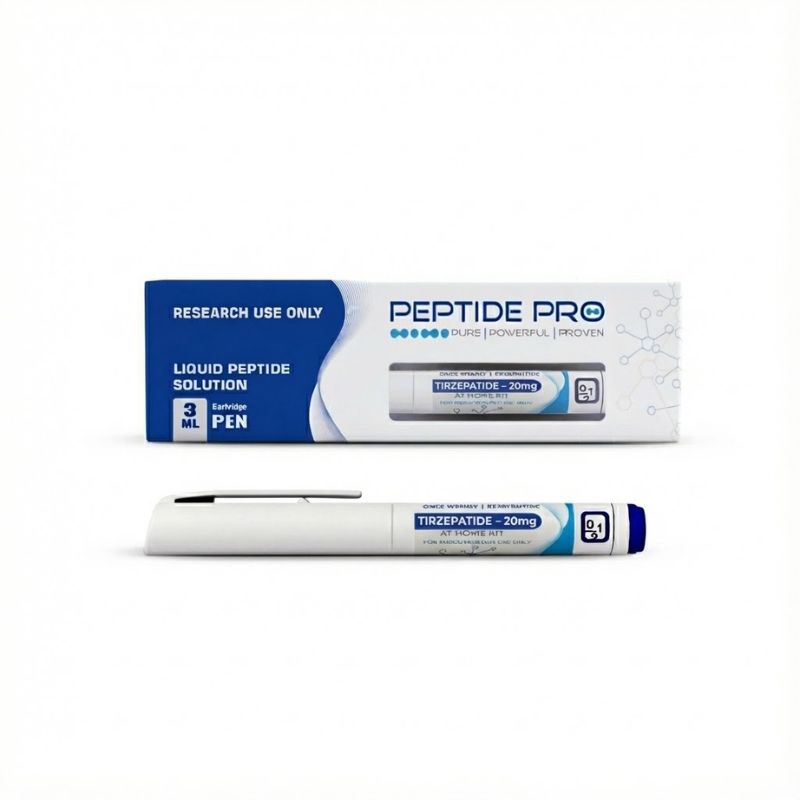
| Specification | Detail |
| Category | Mitochondrial Bioenergetics & Geroprotection |
| Product Name | $\beta$-Nicotinamide Adenine Dinucleotide (Oxidized) |
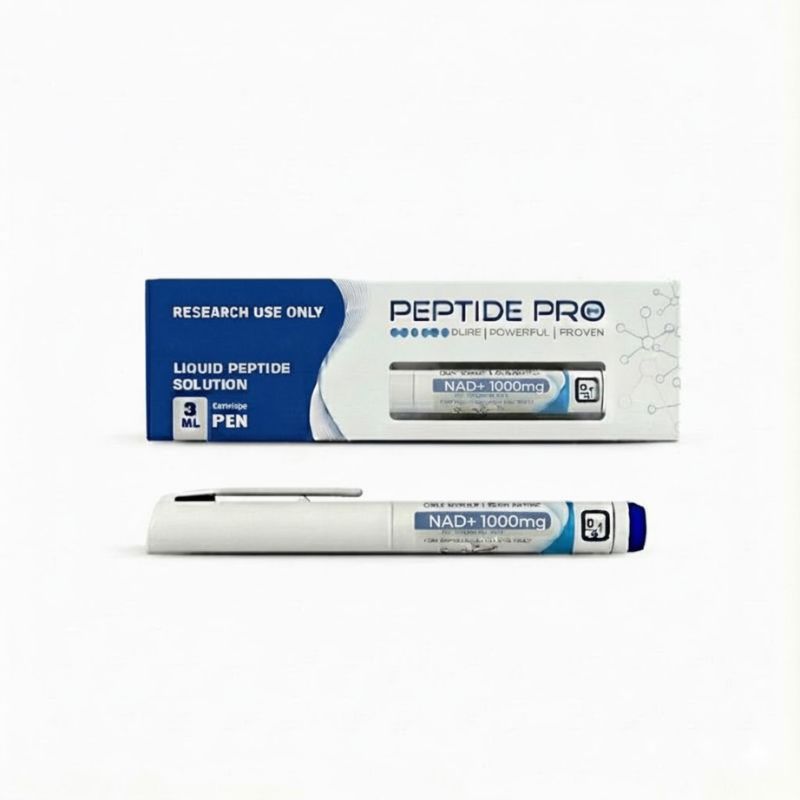
| Quantity | 1000mg (Total Active API) |
| Formulation | Sterile Lyophilised Solution in Bacteriostatic Water |
| Delivery Method | 3ml Precision Reconstituted Pen |
| CAS Number | 53-84-9 |
| Molecular Formula | $C_{21}H_{27}N_{7}O_{14}P_{2}$ |
| Molecular Weight | $\approx 663.43 \text{ g/mol}$ |
| Purity | >98% (HPLC Analysis) |
£269.00 Original price was: £269.00.£199.00Current price is: £199.00.
Abstract The NAD+ 1000mg pen features a hyper-concentrated solution of β-Nicotinamide Adenine Dinucleotide, the essential coenzyme found in all living cells. NAD+ serves two distinct critical roles: it is the central coenzyme for redox reactions (shuttling electrons in the mitochondrial electron transport chain) and the obligate substrate for NAD+-consuming enzymes, specifically Sirtuins (SIRT1-7) and Poly(ADP-ribose) polymerases (PARPs). This 1000mg formulation is the premier reagent for high-load metabolic research, allowing investigators to saturate intracellular pools in models of age-related metabolic decline, neurodegeneration, and mitochondrial dysfunction, thereby overcoming the rate-limiting activity of the salvage pathway enzymes (NAMPT).
Primary Biological Pathway: Sirtuin Activation (Deacetylation) The defining research interest in exogenous NAD+ is its role as fuel for the “longevity genes.” Sirtuins are NAD+-dependent deacetylases that regulate cellular health, DNA repair, and circadian clocks. During aging, NAD+ levels decline, leading to reduced Sirtuin activity. Research utilising the 1000mg pen focuses on restoring these levels to “youthful” concentrations (>500μM intracellularly) to reactivate SIRT1 and SIRT3, thereby enhancing mitochondrial biogenesis and stress resistance via PGC-1$\alpha$ deacetylation.
Secondary Research Finding: DNA Repair and PARP Consumption NAD+ is consumed—not just cycled—by PARP enzymes in response to DNA damage. Chronic genotoxic stress (e.g., UV radiation or ROS) depletes the cellular NAD+ pool, causing a bioenergetic crisis that triggers cell death (necrosis). The 1000mg formulation is utilized in models of ischaemia-reperfusion and chemotherapy-induced toxicity to investigate whether exogenous replenishment can prevent this “metabolic collapse” and maintain genomic stability.
Tertiary Research Finding: Circadian Rhythm Entrainment The circadian clock (regulated by the CLOCK:BMAL1 complex) is intimately tied to NAD+ metabolism. The ratio of NAD+/NADH oscillates over a 24-hour cycle, regulating the acetylation status of clock proteins. Researchers use the 1000mg pen to study “chronotherapy,” investigating whether timed administration of NAD+ can reset circadian rhythms in elderly models or correct metabolic dysregulation associated with shift-work (desynchronosis).
Long-term Genomic and Safety Observations A critical area of investigation involves the enzyme CD38, an “NADase” that increases with age and degrades NAD+. High-dose research (using the 1000mg equivalent) is essential to determine the pharmacokinetics of exogenous administration: specifically, does the NAD+ enter cells intact via the Connexin 43 channels, or is it degraded extracellularly to nicotinamide and taken up via the salvage pathway? Genomic studies monitor Nampt and Cd38 expression to answer these transport questions.
Purity: Validated at >98+% via High-Performance Liquid Chromatography (HPLC). We strictly control the pH and buffer conditions, as NAD+ is chemically unstable in solution and prone to degradation into Nicotinamide (NAM), which is a Sirtuin inhibitor.
Appearance: The 3ml pen contains a clear, colourless to slightly yellow, sterile liquid.
Precision: The pen delivery system ensures accurate volumetric dosing. The high concentration (1000mg total) allows for the delivery of substantial molar loads (e.g., 50-100mg doses) required to influence systemic redox potential in larger animal models.
Storage: The product must be stored at 2∘C to 8∘C.
Refrigeration and Shelf Life The NAD+ 1000mg Pen contains a coenzyme that is significantly less stable than standard peptides. Refrigeration (2∘C to 8∘C) is mandatory. At room temperature, NAD+ hydrolyses. The shelf life is 12 months in the sealed state. Once the pen is accessed, the bacteriostatic environment preserves the solution, but researchers are strongly advised to utilise the entire volume within 14 to 21 days. Unlike peptides, the degradation product (Nicotinamide) actively counteracts the research goal by inhibiting Sirtuins.
Shipping Stability We utilise medical-grade thermal packaging. The solution is stable for up to 48-72 hours at ambient temperatures. However, to minimise hydrolysis, we strongly recommend selecting the fastest available shipping option (Next Day).
Freezing Warning Do not freeze. Freezing can cause precipitation and pH shifts that accelerate the breakdown of the dinucleotide structure. A frozen and thawed NAD+ solution will likely contain high levels of Nicotinamide and ADP-ribose, rendering it unsuitable for metabolic research.
The NAD+ 1000mg Pen is the definitive tool for Systemic Metabolic Loading. NAD+ powder is hygroscopic and acidic; manually dissolving it often results in improper pH levels that destroy the molecule before it is even administered. Furthermore, achieving the high concentrations required for systemic efficacy (without injecting massive volumes of fluid) is difficult with standard glassware.
Our 1000mg pen provides a pH-buffered, sterile, and hyper-concentrated source. It enables researchers to administer “loading doses” comfortably, ensuring that the target tissues receive adequate NAD+ flux to drive mitochondrial repair.
For researchers investigating the downstream effects of NAD+, we recommend examining:
MOTS-c 10mg: (For research into the mitochondrial genome’s response to metabolic stress).
Epithalon 10mg: (For comparative studies on geroprotection and telomere maintenance).
This product is strictly for Research Use Only (RUO). It is not intended for human consumption, injection (e.g., for “NAD+ IV therapy”, anti-aging, or addiction treatment), therapeutic use, or diagnostic procedures. The information provided is for educational and scientific reference only. Purchase is restricted to verified research institutions and qualified individuals. Any evidence of intended misuse for human application will result in immediate order cancellation and blacklisting, in compliance with UK research chemical regulations.
Explore our high-purity compounds — including Retatide (Retatrutide 30 mg), Semaglutide, and more.
Fast UK shipping. Lab-tested quality. Strictly for research use only.