
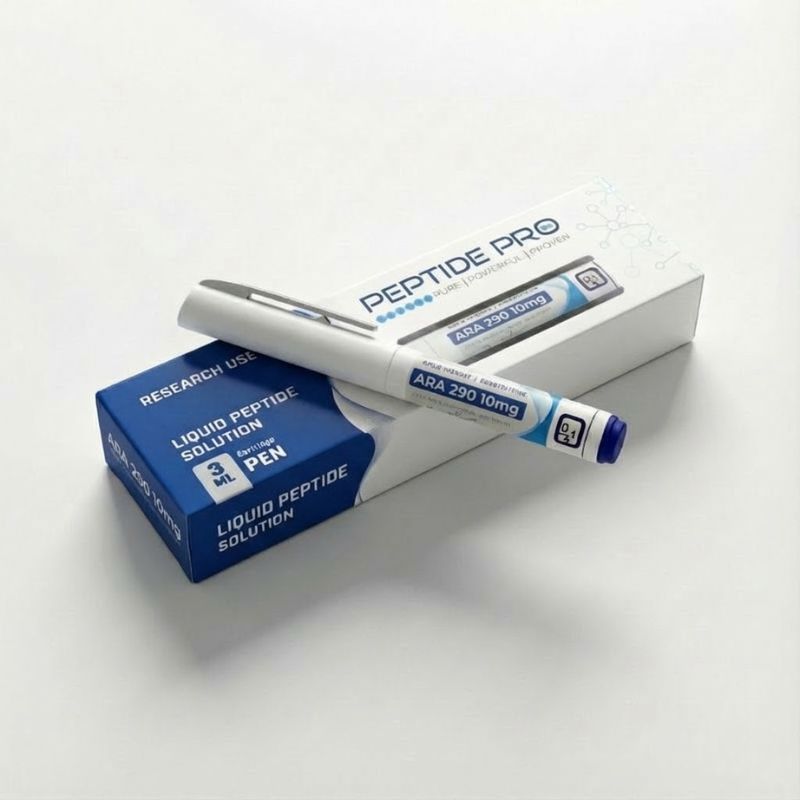
| Specification | Detail |
| Category | Neuroprotection & Anti-Inflammation |
| Product Name | ARA 290 (Cibinetide) |
| Quantity | 10mg (Total Active API) |
| Formulation | Sterile Lyophilised Solution in Bacteriostatic Water |
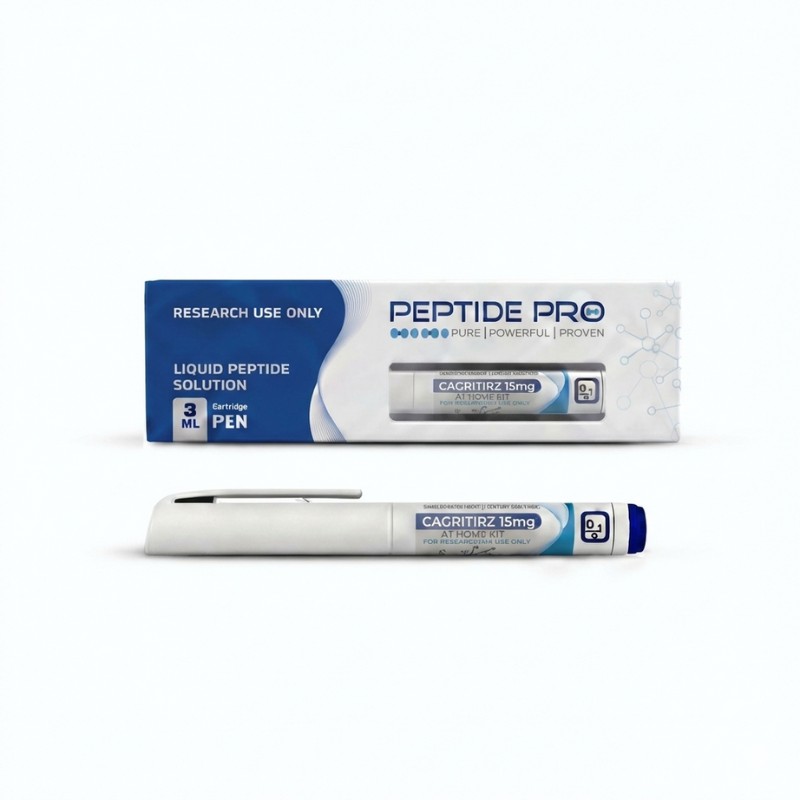
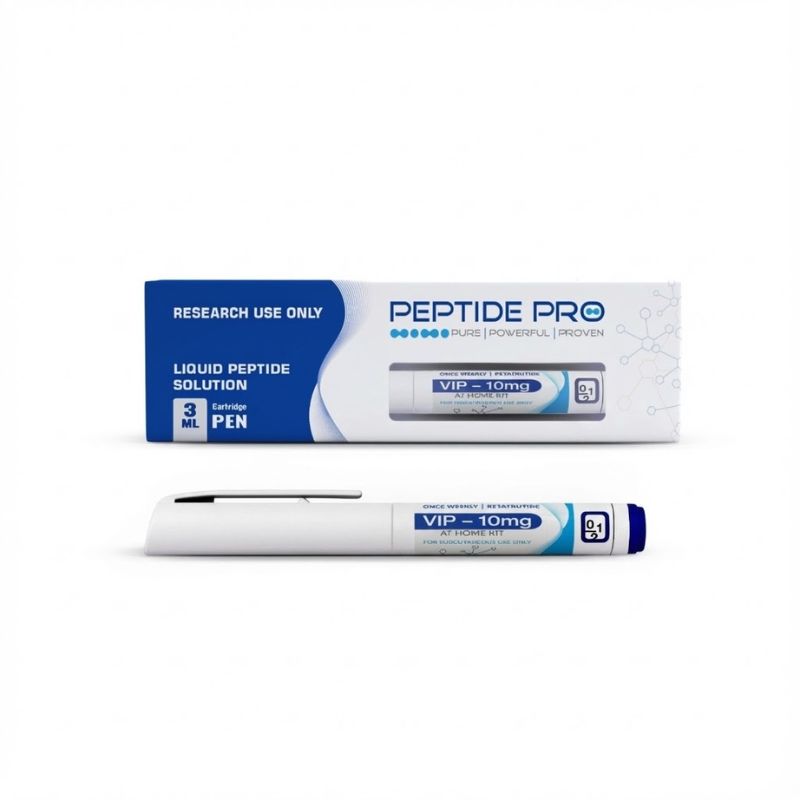
| Delivery Method | 3ml Precision Reconstituted Pen |
| CAS Number | 1208241-08-0 |
| Sequence | Pyr-Glu-Gln-Leu-Glu-Arg-Ala-Leu-Asn-Ser-Ser |
| Molecular Formula | $C_{51}H_{84}N_{16}O_{21}$ |
| Molecular Weight | $\approx 1257.3 \text{ g/mol}$ |
| Purity | >98% (HPLC Analysis) |
£129.00
Primary Biological Pathway: Innate Repair Receptor (IRR) Agonism The defining mechanism of ARA 290 is its high-affinity binding to the IRR. Under normal homeostatic conditions, the IRR is not expressed. However, during tissue injury or hypoxic stress, cells upregulate the expression of the IRR as a protective mechanism. ARA 290 activates this receptor, triggering the phosphorylation of JAK2 and the subsequent activation of the STAT5 and PI3K/Akt pathways. This cascade inhibits apoptosis and reduces the production of inflammatory mediators (TNF-α, IL-6) locally at the site of injury.
Secondary Research Finding: Small Fiber Neuropathy (SFN) and Nerve Density ARA 290 is the gold-standard reagent for researching the regrowth of intra-epidermal nerve fibers (IENF). In models of diabetic or sarcoidosis-associated neuropathy, the peptide has been shown to not only reduce neuropathic pain behaviors (allodynia) but also to physically stimulate the sprouting and regeneration of damaged C-fibers. The 10mg pen allows researchers to conduct longitudinal histological studies to quantify nerve fiber density recovery over time.
Tertiary Research Finding: Metabolic Regulation via HbA1c Beyond neuroprotection, recent studies utilising ARA 290 have observed improvements in glucose handling and HbA1c levels in Type 2 Diabetic models. It is hypothesised that the broad anti-inflammatory effect reduces insulin resistance. Researchers use the 10mg pen to dissect whether this metabolic improvement is a direct effect on pancreatic beta-cells (which express IRR) or a secondary consequence of reduced systemic inflammation.
Long-term Genomic and Safety Observations The critical advantage of ARA 290 over recombinant EPO is safety. EPO increases red blood cell count, leading to increased blood viscosity and thrombotic risk. ARA 290 is non-hematopoietic. Safety studies utilizing the 10mg dose confirm that it does not alter hemoglobin levels, hematocrit, or reticulocyte counts, making it suitable for chronic administration in models where blood thickening would be a lethal confounder.
Purity: Validated at >98+% via High-Performance Liquid Chromatography (HPLC). We strictly verify the N-terminal Pyroglutamate structure, which is essential for the peptide’s resistance to aminopeptidase degradation.
Appearance: The 3ml pen contains a clear, colourless, sterile liquid.
Precision: The pen delivery system ensures accurate volumetric dosing. This is vital for pain research, where the therapeutic window can be narrow and precise mg/kg dosing is required to correlate plasma concentrations with analgesic efficacy.
Storage: The product must be stored at 2∘C to 8∘C.
Refrigeration and Shelf Life The ARA 290 10mg Pen contains a peptide that is chemically stable but biologically sensitive. It must be refrigerated (2∘C to 8∘C). The shelf life is 12 months in the sealed state. Once the pen is accessed, the bacteriostatic environment preserves the solution for 28 days. Researchers should note that the pyroglutamate modification confers reasonable stability, but prolonged exposure to heat can lead to deamidation of the Asparagine/Glutamine residues.
Shipping Stability We utilise medical-grade thermal packaging. The peptide is stable for up to 72 hours at ambient UK temperatures. However, to ensure the highest fidelity for receptor interaction studies, we recommend selecting the fastest available shipping option.
Freezing Warning Do not freeze. Freezing can cause the peptide to precipitate out of the solution. Upon thawing, the solution may exhibit aggregation. In precise neuropathic assays, using an aggregated peptide can lead to inconsistent bioavailability and variable pain threshold data. A frozen pen should be discarded.
The ARA 290 10mg Pen is the definitive tool for Non-Hematopoietic Tissue Repair Research. Using standard EPO for neuroprotection research is flawed because the side effects (stroke/clotting) often kill the animal model before nerve regeneration can be assessed.
Our ARA 290 pen isolates the repair signal from the red blood cell signal. It provides a sterile, concentration-verified source that allows researchers to investigate pure neuro-regeneration and anti-inflammation safely, without the haemodynamic complications of traditional erythropoietin.
For researchers investigating related repair pathways, we recommend examining:
BPC-157 10mg: (For research into gastric and soft tissue repair).
Thymosin Beta-4 (TB-500) 10mg: (For research into actin sequestration and cell migration).
This product is strictly for Research Use Only (RUO). It is not intended for human consumption, injection (e.g., for treating neuropathy, sarcoidosis, or pain management), therapeutic use, or diagnostic procedures. The information provided is for educational and scientific reference only. Purchase is restricted to verified research institutions and qualified individuals. Any evidence of intended misuse for human application will result in immediate order cancellation and blacklisting, in compliance with UK research chemical regulations.
Explore our high-purity compounds — including Retatide (Retatrutide 30 mg), Semaglutide, and more.
Fast UK shipping. Lab-tested quality. Strictly for research use only.