| Specification | Detail |
| Category | GLP-1 Receptor Agonist (First Generation Long-Acting) |
| Product Name | Liraglutide (NN2211) |
| Quantity | 10mg (Total Active API Concentration) |
| Formulation | Sterile Lyophilised Solution in Bacteriostatic Water |
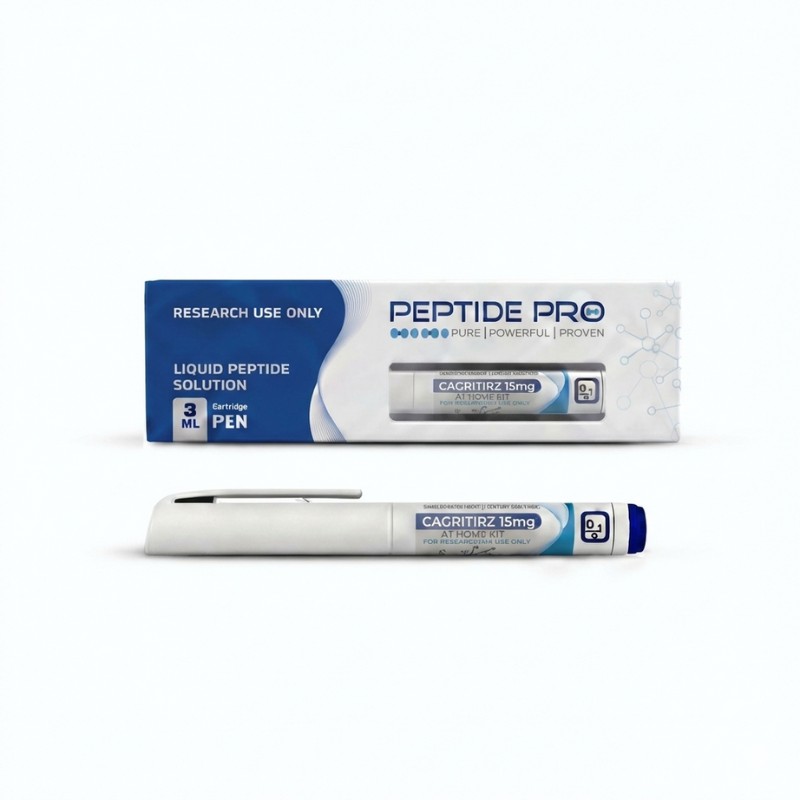
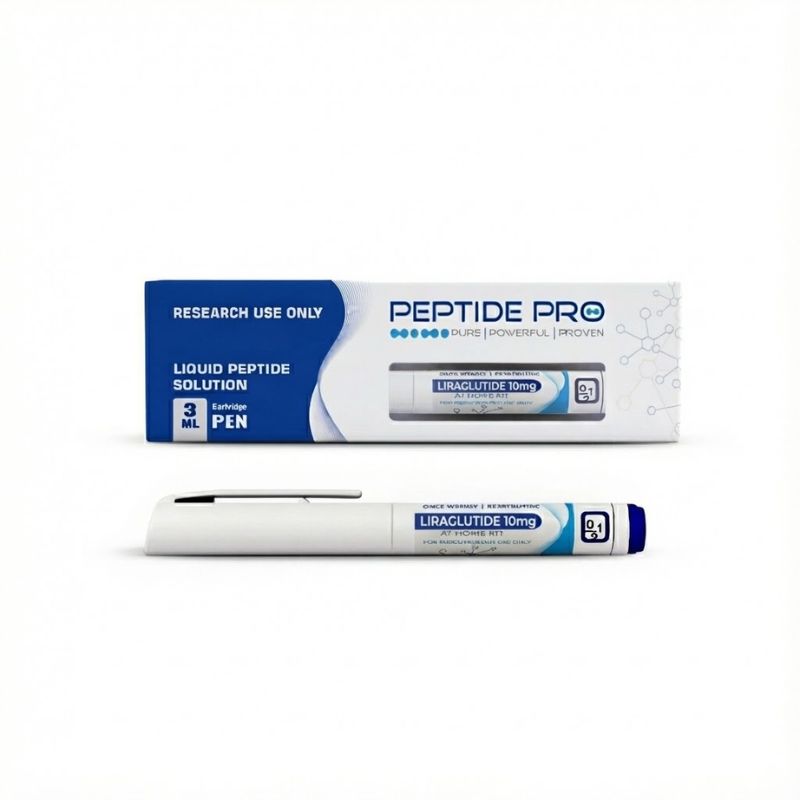
| Delivery Method | 3ml Precision Reconstituted Pen |
| CAS Number | 204656-20-2 |
| Molecular Formula | $C_{172}H_{265}N_{43}O_{51}$ |
| Molecular Weight | $\approx 3751.2 \text{ g/mol}$ |
| Purity | >99% (HPLC Analysis) |
£249.00
Abstract The Liraglutide 10mg peptide pen features a highly purified, acylated glucagon-like peptide-1 (GLP-1) analogue, widely recognised as the “reference standard” in modern incretin research. Structurally, Liraglutide is derived from native GLP-1(7-37) with a 97% homology; the crucial modification involves the substitution of Lysine-34 with Arginine and the attachment of a C-16 fatty acid (palmitic acid) derivative via a glutamic acid spacer to Lysine-26. This lipophilic modification facilitates non-covalent binding to serum albumin, protecting the peptide from rapid degradation by Dipeptidyl Peptidase-4 (DPP-4). The 10mg formulation is the essential reagent for controlled comparative studies, serving as the benchmark against which novel mono-agonists and multi-agonists (like Semaglutide or Tirzepatide) are evaluated in models of obesity, insulin resistance, and neurodegeneration.
Primary Biological Pathway: Albumin-Mediated Protraction The defining research characteristic of Liraglutide is its pharmacokinetic profile, driven by its “protraction mechanism.” The attached C-16 fatty acid chain promotes the formation of heptamers and allows the peptide to bind reversibly to albumin in the bloodstream. This binding shields the peptide from enzymatic cleavage and renal filtration, extending its half-life significantly compared to native GLP-1. Researchers utilise the 10mg pen to study this specific mechanism of delayed absorption and to model daily administration protocols, contrasting them with the weekly kinetics of next-generation analogues.
Secondary Research Finding: Central Anorexigenic Signalling Liraglutide is a critical tool for mapping the central nervous system’s regulation of appetite. It crosses the blood-brain barrier to activate GLP-1 receptors in the arcuate nucleus of the hypothalamus. Specifically, it stimulates POMC/CART neurons (appetite-suppressing) while inhibiting NPY/AgRP neurons (appetite-stimulating). The 10mg formulation is used to quantify the reduction in caloric intake and to investigate the phenomenon of “set-point regulation” in diet-induced obese (DIO) models.
Tertiary Research Finding: Neuroprotection and Amyloid Pathology Beyond metabolism, Liraglutide is heavily researched for its neuroprotective properties. It functions as a growth factor in the brain, reducing neuro-inflammation and oxidative stress. Current studies utilising the 10mg pen are investigating its potential to prevent synaptic loss in models of Alzheimer’s and Parkinson’s disease. Specifically, researchers are measuring its impact on glucose transport across the blood-brain barrier and its ability to reduce amyloid-beta plaque load.
Long-term Genomic and Safety Observations A standard component of Liraglutide research involves the thyroid gland. Due to the high density of GLP-1 receptors on rodent C-cells, Liraglutide can induce calcitonin release in murine models. Genomic toxicology studies use the 10mg dose to monitor Ret proto-oncogene activation and C-cell hyperplasia. This data is vital for distinguishing species-specific pathology (rodent vs. primate) and establishing safety margins for chronic receptor agonism.
Purity: Validated at >98+% via High-Performance Liquid Chromatography (HPLC). The integrity of the acylation (fatty acid attachment) is strictly verified to ensure proper albumin binding kinetics.
Appearance: The 3ml pen contains a clear, colourless, sterile liquid.
Precision: The pen device features a micro-dosing mechanism, allowing for precise titration (e.g., 0.6mg equivalent scaling), which is essential for mimicking the “step-up” dosing regimens required to mitigate gastrointestinal side effects in test subjects.
Storage: The product must be stored at 2∘C to 8∘C.
Refrigeration and Shelf Life The Liraglutide 10mg Pen is a robust peptide due to its albumin-binding design but requires refrigeration (2∘C to 8∘C) to prevent aggregation. The shelf life is 12 months in the sealed state. Once the pen is accessed, the bacteriostatic environment preserves the solution for 28 days. Liraglutide is sensitive to agitation; researchers should avoid vigorous shaking which can disrupt the micelle-like structures formed by the fatty acid chains.
Shipping Stability We utilise medical-grade thermal packaging. The peptide is stable for up to 72 hours at ambient UK temperatures. However, to ensure the tertiary structure remains optimal for receptor docking, we recommend selecting the fastest available shipping option.
Freezing Warning Do not freeze. Freezing causes the peptide to precipitate irreversibly. The fatty acid side chain makes Liraglutide particularly susceptible to physical destabilisation during freeze-thaw cycles. A frozen pen will exhibit cloudiness and must be discarded.
The Liraglutide 10mg Pen is the Industry Standard Control. In almost every study investigating a new metabolic peptide (e.g., Semaglutide, Tirzepatide, Retatrutide), Liraglutide serves as the active comparator control group.
Our 10mg pen provides a high-purity, concentration-verified source of this critical benchmark reagent. It eliminates the formulation difficulties often encountered with lipophilic peptides (which can be difficult to dissolve in standard buffers), ensuring that your control data is flawless and your comparative conclusions are valid.
For researchers conducting “Next-Generation” comparative studies, we recommend examining:
Semaglutide 10mg: (To compare daily vs. weekly pharmacokinetics).
Tirzepatide 20mg: (To compare Mono-agonist vs. Dual-agonist efficacy).
This product is strictly for Research Use Only (RUO). It is not intended for human consumption, injection, therapeutic use (e.g., for Type 2 Diabetes or weight management), or diagnostic procedures. The information provided is for educational and scientific reference only. Purchase is restricted to verified research institutions and qualified individuals. Any evidence of intended misuse for human application will result in immediate order cancellation and blacklisting, in compliance with UK research chemical regulations.
Explore our high-purity compounds — including Retatide (Retatrutide 30 mg), Semaglutide, and more.
Fast UK shipping. Lab-tested quality. Strictly for research use only.