
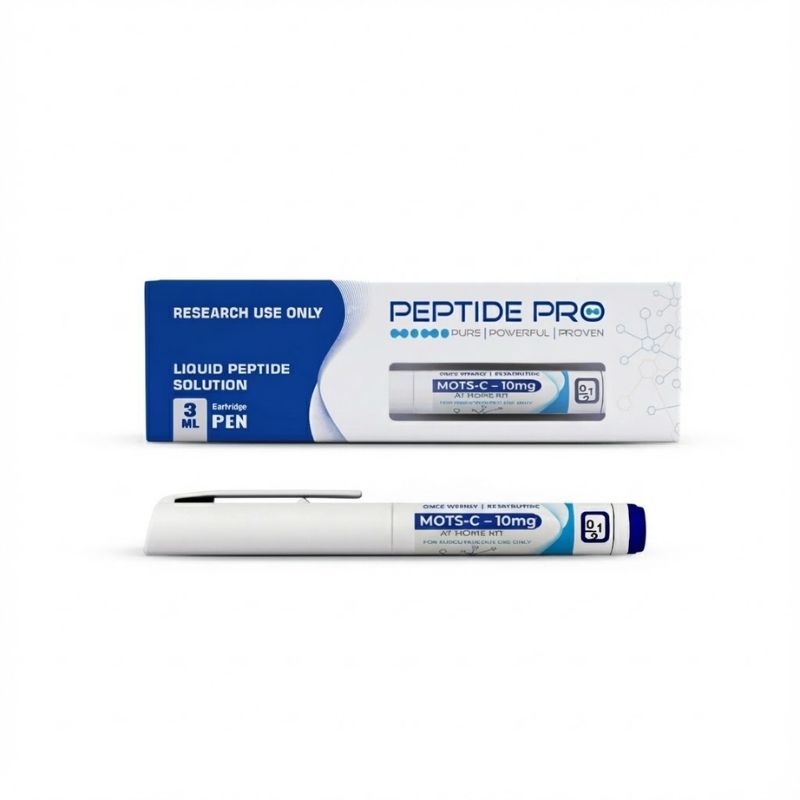
| Specification | Detail |
| Category | Mitochondrial-Derived Peptides (MDPs) & Metabolism |
| Product Name | MOTS-c (Mitochondrial ORF of the 12S rRNA-c) |
| Quantity | 10mg (Total Active API) |
| Formulation | Sterile Lyophilised Solution in Bacteriostatic Water |
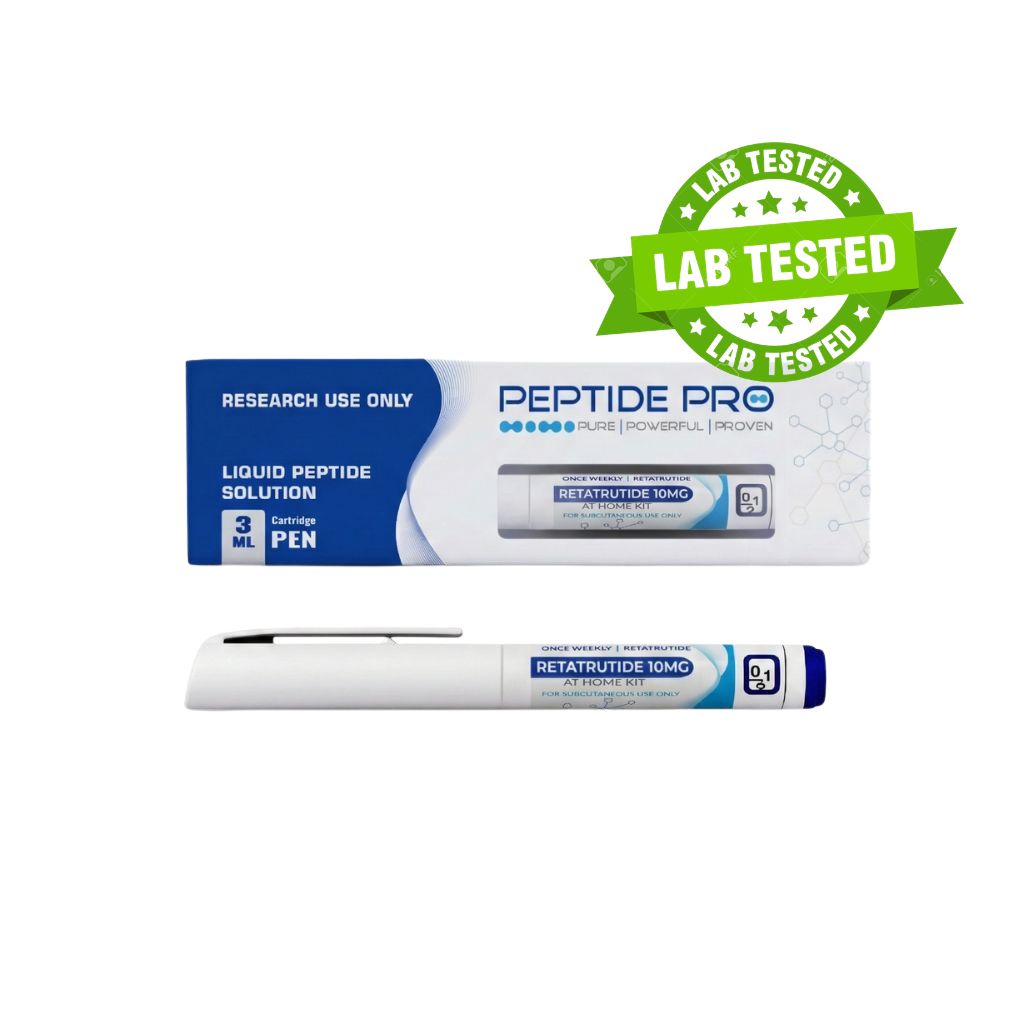
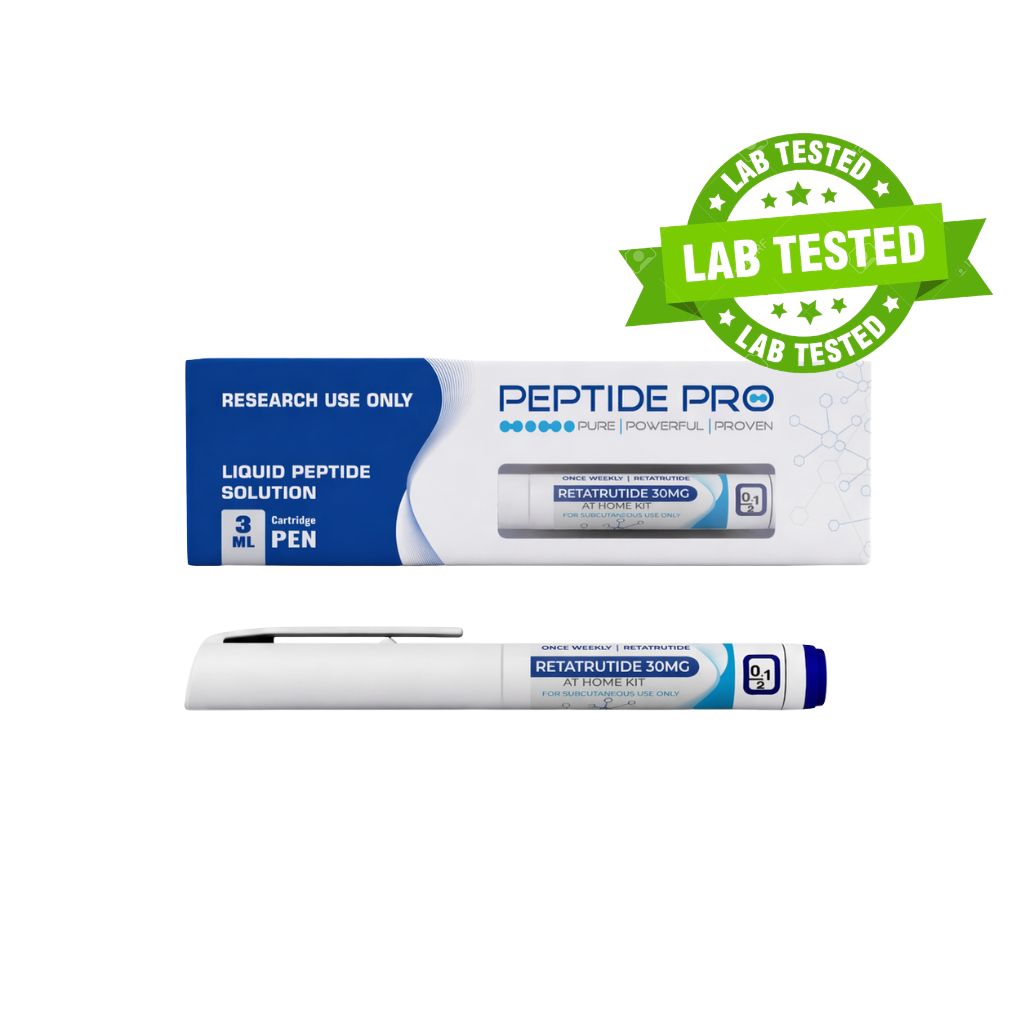
| Delivery Method | 3ml Precision Reconstituted Pen |
| CAS Number | 1627580-64-6 |
| Molecular Formula | $C_{101}H_{152}N_{28}O_{22}S_{2}$ |
| Molecular Weight | $\approx 2174.6 \text{ g/mol}$ |
| Purity | >99% (HPLC Analysis) |
£109.00
Abstract The MOTS-c 10mg peptide pen features a concentrated solution of the Mitochondrial Open Reading Frame of the 12S rRNA-c, a 16-amino acid peptide encoded within the mitochondrial genome itself. Unlike traditional nuclear-encoded peptides, MOTS-c functions as a “mitokine,” a retrograde signalling molecule that translocates to the nucleus to regulate metabolic homeostasis in response to metabolic stress. This 10mg formulation is specifically engineered for research into age-related metabolic decline, insulin resistance, and physical performance. It serves as the primary reagent for investigating the AMPK-SIRT1-PGC1$\alpha$ axis, offering a unique window into how the mitochondrial genome actively dictates systemic energy handling and cytoprotection.
Primary Biological Pathway: The Folate-Methionine Cycle The defining mechanism of MOTS-c is its regulation of the folate-methionine cycle. Upon entering the cytosol, MOTS-c inhibits the folate cycle at the level of 5-methyl-tetrahydrofolate (5-methyl-THF). This inhibition leads to an accumulation of AICAR (5-aminoimidazole-4-carboxamide ribonucleotide), which is a potent activator of AMP-activated protein kinase (AMPK). By triggering AMPK phosphorylation, MOTS-c mimics the cellular effects of exercise and caloric restriction, promoting glucose uptake and fatty acid oxidation even in sedentary states. The 10mg pen is utilised to quantify the magnitude of this AMPK activation in skeletal muscle and liver tissues.
Secondary Research Finding: Insulin Sensitivity and Obesity MOTS-c is a critical subject in Type 2 Diabetes research. It has been observed to prevent diet-induced obesity (DIO) and reverse age-dependent insulin resistance. Research utilising the 10mg format focuses on the peptide’s ability to enhance insulin sensitivity by acting directly on skeletal muscle to increase GLUT4 translocation. Studies typically involve challenging high-fat diet (HFD) fed models with MOTS-c to measure the improvement in glucose tolerance tests (GTT) and the reduction in visceral adiposity.
Tertiary Research Finding: Physical Performance and Osteoporosis Recent data suggests MOTS-c acts as an “exercise-mimetic” not just for metabolism, but for structural integrity. It enhances physical performance by promoting mitochondrial biogenesis in myocytes. Furthermore, it plays a role in osteogenesis; the 10mg pen is used in models of osteopenia to investigate the differentiation of bone marrow mesenchymal stem cells (BMSCs) into osteoblasts rather than adipocytes, mediated via the TGF-β/Smad pathway.
Long-term Genomic and Safety Observations A unique aspect of MOTS-c research is its nuclear translocation. Under stress, the peptide enters the nucleus and interacts with adaptive response elements (AREs) to regulate gene expression. Genomic profiling studies using the 10mg dose are currently mapping the “MOTS-c transcriptome,” specifically looking for the upregulation of antioxidant genes (Nrf2 targets) and ensuring that this metabolic reprogramming does not inadvertently activate oncogenic pathways in proliferative tissues.
Purity: Validated at >98+% via High-Performance Liquid Chromatography (HPLC). We strictly control the synthesis to ensure the distinct disulfide bridge is intact if present in the specific folding variation, or that the linear sequence is protected from rapid proteolysis.
Appearance: The 3ml pen contains a clear, colourless, sterile liquid.
Precision: The pen delivery system ensures consistent volumetric dosing, essential for establishing the pharmacokinetics of this rapidly cleared mitochondrial peptide.
Storage: The product must be stored at 2∘C to 8∘C.
Refrigeration and Shelf Life The MOTS-c 10mg Pen is a sensitive biological reagent. It must be refrigerated (2∘C to 8∘C). The shelf life is 12 months in the sealed state. Once the pen is accessed, the bacteriostatic environment preserves the solution for 28 days. Researchers should note that MDPs (Mitochondrial Derived Peptides) can be susceptible to aggregation; therefore, utilising the reagent within the 28-day window is standard practice to ensure consistent nuclear translocation efficiency.
Shipping Stability We utilise medical-grade thermal packaging. The peptide is stable for up to 72 hours at ambient UK temperatures. However, to minimise conformational changes, we recommend selecting the fastest available shipping option.
Freezing Warning Do not freeze. Freezing can cause the peptide to precipitate out of the solution. Upon thawing, re-solubilisation may be incomplete, leading to non-homogenous dosing. This variability can drastically skew quantitative data regarding AMPK activation. A frozen pen should be discarded.
The MOTS-c 10mg Pen is the definitive tool for Metabolic Reprogramming Research. Investigating exercise mimetics requires precise control over dosage to distinguish between physiological signaling and pharmacological toxicity. Manual reconstitution of MOTS-c can be challenging due to its unique solubility properties.
Our precision pen provides a concentration-verified, sterile solution that allows for accurate administration. This ensures that researchers can attribute observed metabolic improvements strictly to the MOTS-c signalling pathway, providing clean, reproducible data for publication.
For researchers investigating related mitochondrial and longevity pathways, we recommend examining:
SS-31 50mg: (For research into mitochondrial structure/cardiolipin repair).
Humanin 10mg: (For comparative studies on cytoprotective MDPs).
This product is strictly for Research Use Only (RUO). It is not intended for human consumption, injection (e.g., for metabolic manipulation or bodybuilding), therapeutic use, or diagnostic procedures. The information provided is for educational and scientific reference only. Purchase is restricted to verified research institutions and qualified individuals. Any evidence of intended misuse for human application will result in immediate order cancellation and blacklisting, in compliance with UK research chemical regulations.
Explore our high-purity compounds — including Retatide (Retatrutide 30 mg), Semaglutide, and more.
Fast UK shipping. Lab-tested quality. Strictly for research use only.