

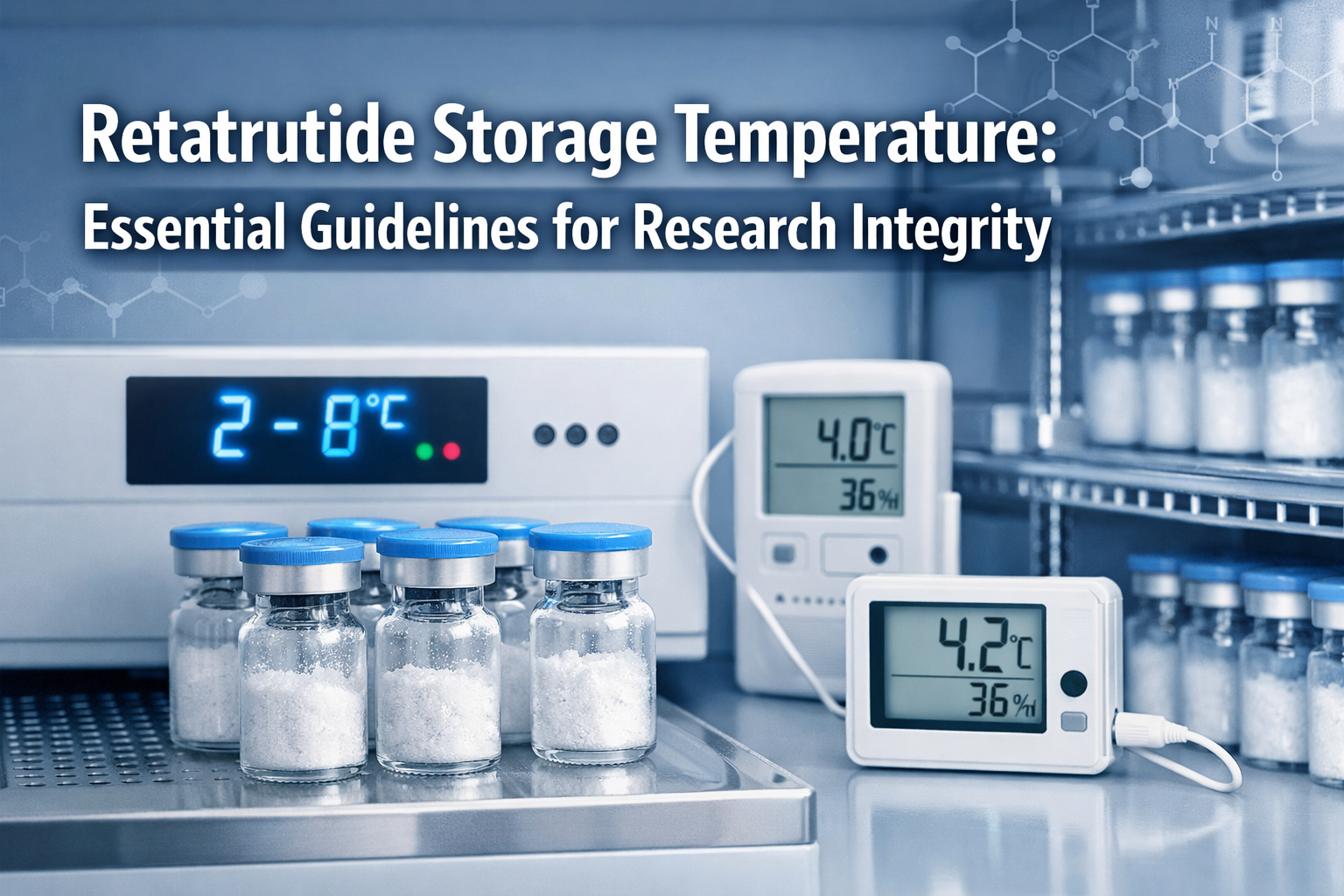
When handling advanced research peptides, proper storage conditions can mean the difference between reliable experimental results and compromised data. Retatrutide storage temperature requirements are particularly critical for maintaining the structural integrity and biological activity of this triple-agonist peptide currently under investigation for metabolic research applications. Understanding the precise temperature parameters for both lyophilized and reconstituted forms ensures that researchers can maintain compound stability throughout the entire experimental timeline.
Research-grade peptides like retatrutide represent significant investments in both financial resources and scientific inquiry. Improper storage—even for brief periods—can trigger degradation pathways that fundamentally alter the peptide’s molecular structure, rendering experimental outcomes unreliable or entirely invalid. For laboratories and research facilities handling premium research-grade peptides, establishing rigorous temperature control protocols isn’t merely a best practice; it’s an absolute necessity for scientific integrity.
Key Takeaways
- Lyophilized retatrutide should be stored at 2-8°C (refrigerated) or -20°C to -80°C (frozen) for optimal long-term stability, with shelf life extending up to 24-36 months under proper conditions
- Reconstituted retatrutide requires strict refrigeration at 2-8°C and should typically be used within 30 days to prevent degradation
- Temperature fluctuations represent one of the primary threats to peptide stability, making consistent monitoring and calibrated storage equipment essential
- Light exposure and humidity work synergistically with improper temperature to accelerate peptide degradation
- Documentation protocols including temperature logs and storage timelines are critical for maintaining research compliance and experimental validity
Understanding Retatrutide: A Brief Overview
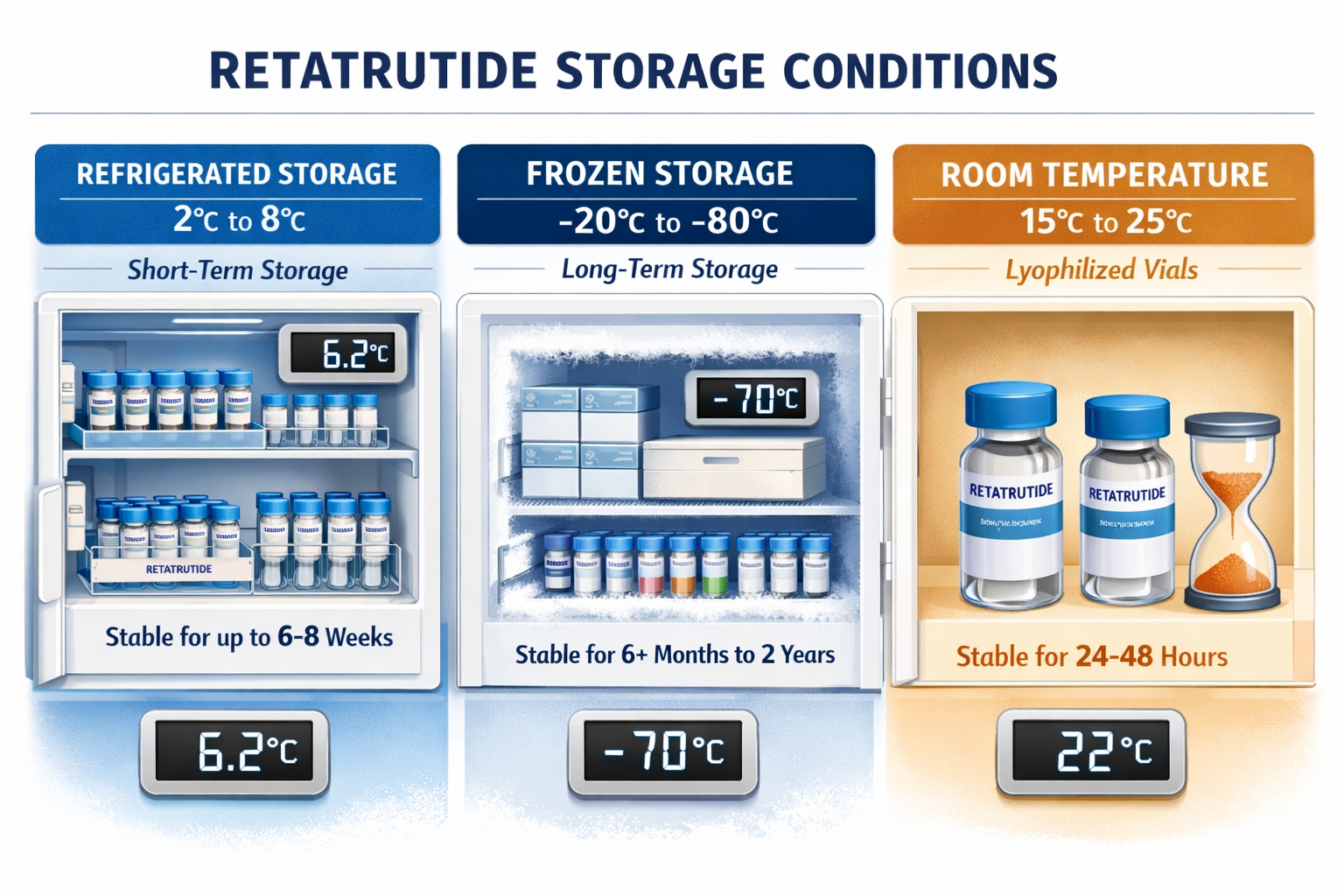
Retatrutide (also known as LY3437943) is a novel triple-agonist peptide that simultaneously activates the glucose-dependent insulinotropic polypeptide (GIP), glucagon-like peptide-1 (GLP-1), and glucagon (GCG) receptors [1]. This unique mechanism of action positions retatrutide as a compound of significant research interest in metabolic studies, particularly those investigating weight management, glucose homeostasis, and energy expenditure pathways.
As a synthetic peptide with a specific amino acid sequence, retatrutide’s biological activity depends entirely on maintaining its precise three-dimensional structure. Like all peptides, it consists of amino acids linked by peptide bonds that can be susceptible to hydrolysis, oxidation, and other degradation mechanisms when exposed to suboptimal environmental conditions [2].
Why Storage Temperature Matters for Peptide Stability
Peptides are inherently sensitive biomolecules. Their stability is governed by:
- Thermal degradation: Elevated temperatures accelerate chemical reactions that break peptide bonds
- Aggregation: Improper temperatures can cause peptides to clump together, reducing solubility and activity
- Oxidation: Temperature influences the rate of oxidative modifications to sensitive amino acid residues
- Hydrolysis: Water-mediated breakdown of peptide bonds occurs more rapidly at higher temperatures
- Conformational changes: Temperature shifts can alter the peptide’s three-dimensional structure
For researchers sourcing compounds from reputable suppliers like PEPTIDE PRO, understanding these degradation pathways helps establish appropriate handling protocols from the moment of delivery through final experimental application.
Optimal Retatrutide Storage Temperature: Lyophilized Form
Lyophilization (freeze-drying) is the standard method for stabilizing peptides during storage and transport. This process removes water content, significantly reducing the risk of hydrolytic degradation and microbial contamination. However, even lyophilized peptides require careful temperature management.
Recommended Temperature Ranges
Short to Medium-Term Storage (Up to 12 months):
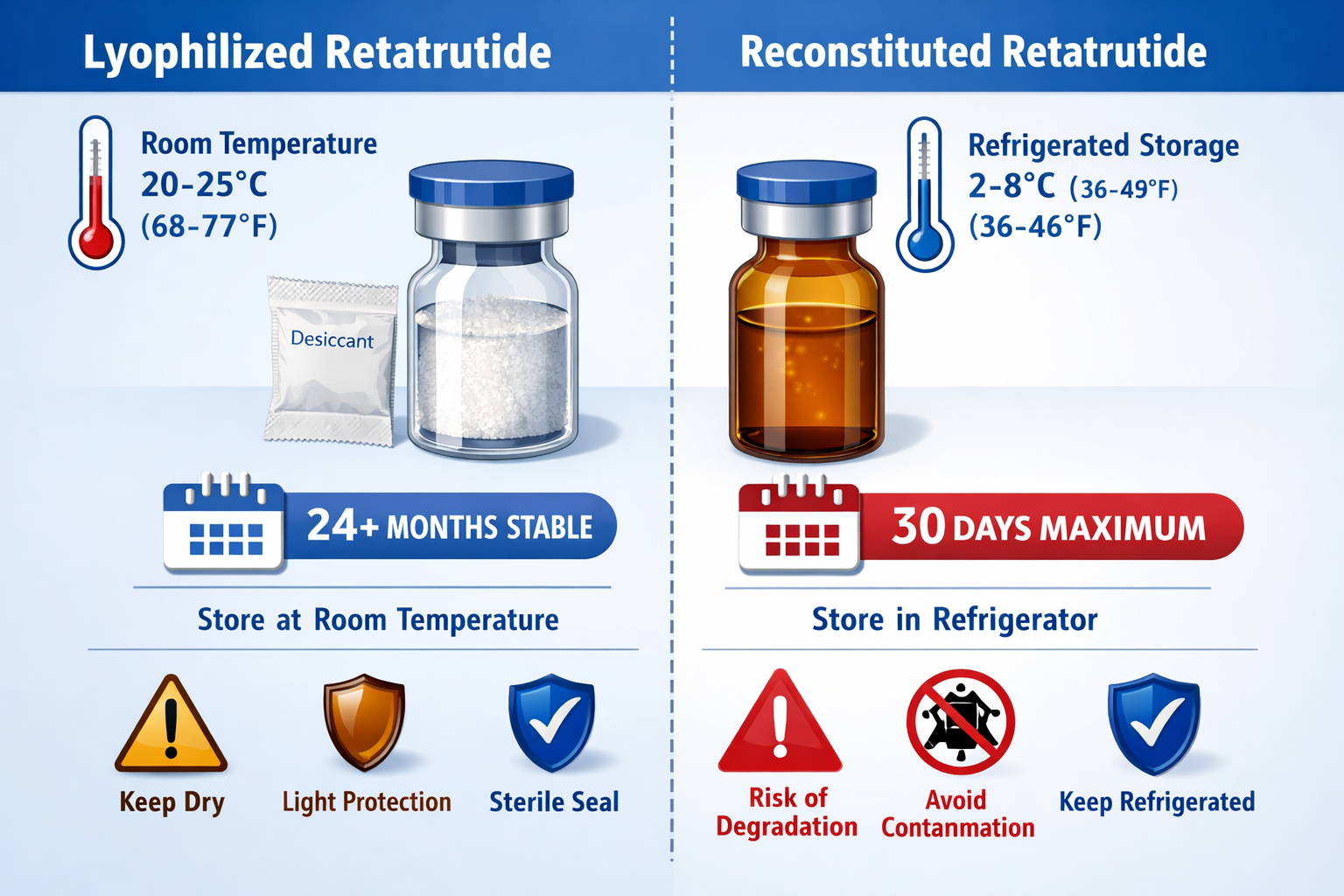
- Temperature: 2-8°C (refrigerated conditions)
- Environment: Sealed container with desiccant
- Light exposure: Protected from direct light
- Humidity: Low humidity environment
Long-Term Storage (12-36 months):
- Temperature: -20°C to -80°C (frozen conditions)
- Environment: Sealed, airtight container
- Light exposure: Complete darkness preferred
- Humidity: Minimal moisture exposure
Storage Duration and Stability
Research indicates that lyophilized peptides stored under optimal conditions maintain 95%+ purity for extended periods [3]. For retatrutide specifically:
| Storage Temperature | Expected Stability | Recommended Maximum Duration |
|---|---|---|
| 2-8°C (Refrigerated) | High | 12-24 months |
| -20°C (Standard Freezer) | Very High | 24-36 months |
| -80°C (Ultra-Low Freezer) | Optimal | 36+ months |
| Room Temperature (20-25°C) | Limited | 1-2 weeks (emergency only) |
⚠️ Important Note: These timelines assume the pen peptide remains sealed and unopened. Once exposed to air or reconstituted, stability parameters change dramatically.
Critical Storage Considerations for Lyophilized Retatrutide
Desiccant Protection
🛡️ Lyophilized peptides should always be stored with desiccant packets to absorb any residual moisture. Even small amounts of humidity can initiate degradation processes.
Container Integrity
Ensure pen peptides are properly sealed. Compromised seals allow moisture infiltration and oxidative exposure, both of which accelerate degradation.
Temperature Consistency
Avoid repeated freeze-thaw cycles. Each temperature fluctuation stresses the peptide structure and can promote aggregation.
Light Protection
Many peptides are photosensitive. Store retatrutide in amber pen peptides or in complete darkness to prevent photodegradation.
For researchers ordering from suppliers offering fast UK delivery, it’s essential to transfer compounds to appropriate storage conditions immediately upon receipt, minimizing any time spent at ambient temperatures.
Retatrutide Storage Temperature After Reconstitution
Once retatrutide is reconstituted with bacteriostatic water or another appropriate solvent, the storage requirements become significantly more stringent. The presence of water dramatically increases susceptibility to hydrolytic degradation and microbial contamination.
Reconstituted Storage Parameters
Mandatory Storage Conditions:
- Temperature: 2-8°C (refrigerated) – non-negotiable
- Maximum duration: 14-30 days (depending on sterility protocols)
- Container: Sterile, sealed pen peptide
- Light exposure: Protected from light at all times
- Handling: Aseptic technique for all withdrawals
Why Refrigeration Is Critical Post-Reconstitution
When peptides exist in aqueous solution, several degradation pathways become significantly more active:
- Hydrolytic cleavage: Water molecules can attack peptide bonds, especially at elevated temperatures
- Bacterial growth: Solutions provide ideal environments for microbial proliferation unless properly preserved
- Aggregation: Peptides in solution can interact and form inactive aggregates
- Oxidation: Dissolved oxygen can modify sensitive amino acid residues
Professional Insight: “The transition from lyophilized to reconstituted form represents the most critical vulnerability period for peptide stability. Immediate refrigeration and sterile handling are non-negotiable requirements for maintaining compound integrity.” – Research Laboratory Guidelines
Reconstituted Retatrutide Stability Timeline
| Storage Condition | Stability Period | Recommended Use |
|---|---|---|
| 2-8°C (Refrigerated, sterile) | 21-30 days | Standard protocol |
| 2-8°C (Refrigerated, non-sterile) | 7-14 days | Use with caution |
| Room Temperature | 24-48 hours | Emergency only |
| -20°C (Frozen) | Not recommended | Avoid freeze-thaw |
❄️ Critical Warning: Do not freeze reconstituted retatrutide. Freezing aqueous peptide solutions can cause ice crystal formation, which physically damages the peptide structure and promotes aggregation. If long-term storage is needed, maintain lyophilized form until ready for use.
Best Practices for Reconstituted Storage
Aliquoting Strategy
Divide reconstituted solution into multiple small pen peptides rather than repeatedly accessing a single large pen peptide. This minimizes:
- Contamination risk from repeated needle punctures
- Temperature fluctuations from removal and return to refrigeration
- Oxidative exposure from air introduction
Labeling Requirements
Every reconstituted pen peptide should be clearly labeled with:
- Peptide name and concentration
- Reconstitution date
- Expiration date (typically 30 days post-reconstitution)
- Storage temperature requirements
- Researcher initials or identification
Sterility Maintenance
Use bacteriostatic water containing 0.9% benzyl alcohol when reconstituting to inhibit bacterial growth. Always employ aseptic technique and sterile needles for each withdrawal.
For laboratories maintaining extensive peptide inventories, establishing standard operating procedures (SOPs) for reconstitution and storage ensures consistency across research teams and experimental replicates.
Temperature Monitoring and Quality Assurance
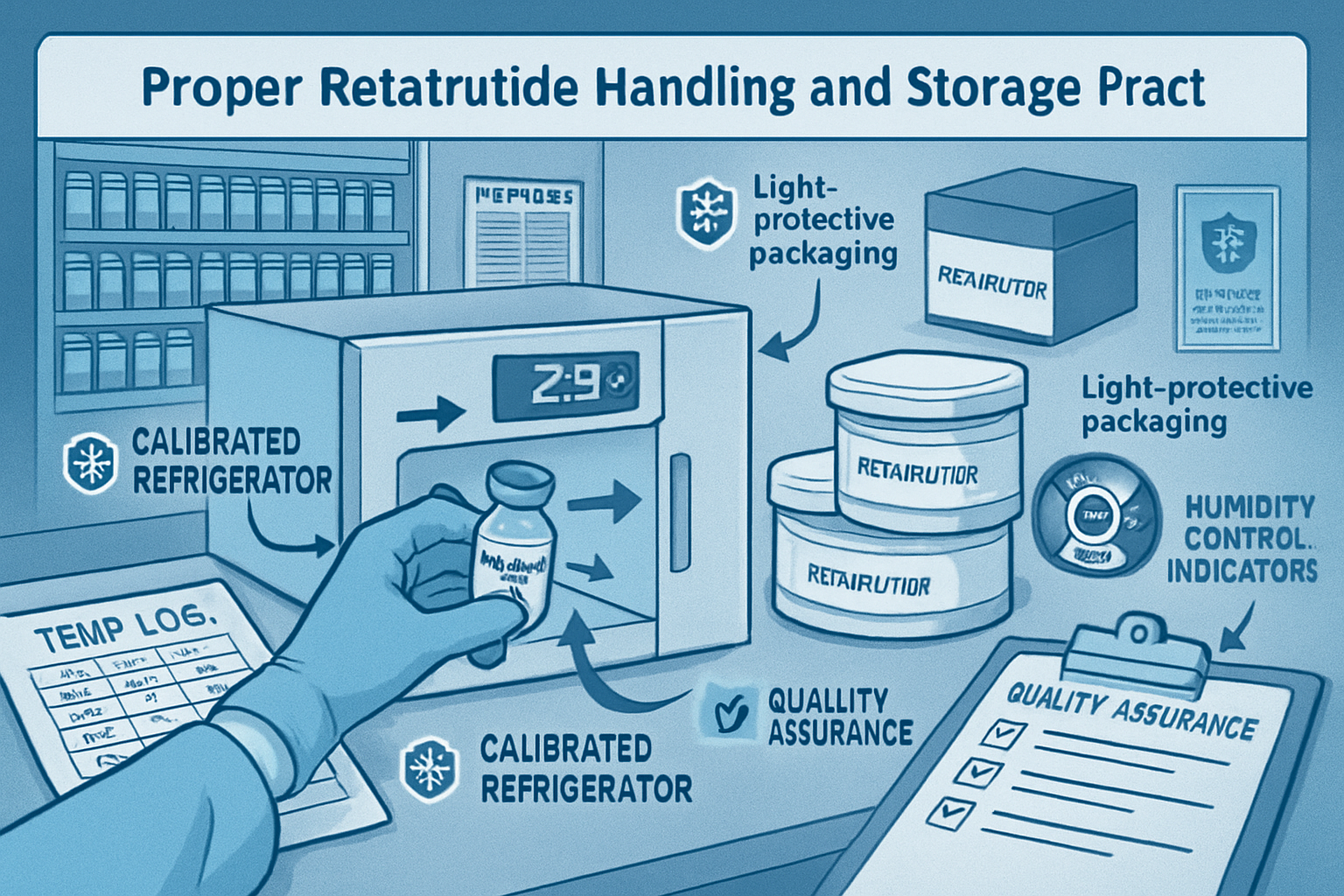
Maintaining proper retatrutide storage temperature requires more than simply placing pen peptides in a refrigerator or freezer. Professional research facilities implement comprehensive monitoring and documentation systems to ensure continuous compliance with storage specifications.
Equipment Calibration and Validation
Refrigerator and Freezer Requirements:
✅ Medical-grade or laboratory-grade units specifically designed for temperature-sensitive materials
✅ Digital temperature displays with ±0.5°C accuracy
✅ Alarm systems that alert personnel to temperature excursions
✅ Backup power systems to maintain temperature during outages
✅ Regular calibration verified against certified thermometers
Standard household refrigerators often experience temperature fluctuations of 5-10°C, making them unsuitable for peptide storage. The door compartments of any refrigerator experience the greatest temperature variation and should never be used for peptide storage.
Temperature Monitoring Protocols
Continuous Monitoring Systems:
Modern research facilities employ various monitoring approaches:
- Data loggers: Automated devices that record temperature at regular intervals (every 15-60 minutes)
- Remote monitoring: Systems that transmit temperature data to centralized databases
- Alert systems: Immediate notification of out-of-range conditions via email, text, or alarm
- Manual logs: Daily temperature checks recorded in laboratory notebooks
Documentation Requirements:
Comprehensive temperature logs should include:
- Date and time of reading
- Actual temperature recorded
- Acceptable temperature range
- Personnel initials
- Any corrective actions taken for excursions
- Equipment maintenance records
Responding to Temperature Excursions
Despite best efforts, temperature excursions occasionally occur due to equipment failure, power outages, or human error. When this happens:
Immediate Actions:
- Document the excursion (time, duration, temperature range)
- Assess peptide exposure (which pen peptides were affected)
- Transfer compounds to backup storage immediately
- Quarantine potentially compromised materials
- Evaluate whether compounds remain suitable for use
Assessment Criteria:
| Excursion Type | Lyophilized Impact | Reconstituted Impact |
|---|---|---|
| 2 hours at room temp | Minimal | Moderate concern |
| 8 hours at room temp | Moderate concern | Likely compromised |
| 24 hours at room temp | Significant concern | Definitely compromised |
| Single freeze-thaw (lyophilized) | Minimal | N/A |
| Multiple freeze-thaw cycles | Moderate to severe | Severe |
When in doubt, researchers should consider peptide integrity compromised and either:
- Conduct analytical testing (HPLC, mass spectrometry) to verify purity
- Use the material for preliminary optimization studies only
- Dispose of the compound and obtain fresh material
For researchers working with high-purity peptides where experimental validity is paramount, erring on the side of caution regarding temperature excursions is always the prudent approach.
Environmental Factors Beyond Temperature
While retatrutide storage temperature represents the primary stability concern, several additional environmental factors significantly influence peptide longevity and integrity.
Light Exposure and Photodegradation
Many peptides contain amino acids that are photosensitive, particularly:
- Tryptophan: Highly susceptible to UV-induced oxidation
- Tyrosine: Can undergo photochemical modifications
- Cysteine: Disulfide bonds can be affected by light exposure
- Methionine: Prone to photo-oxidation
Protection Strategies:
- Store in amber or opaque pen peptides
- Keep storage units closed and in darkened areas
- Use aluminum foil wrapping for additional protection
- Minimize exposure during handling and preparation
Humidity Control
Moisture is the enemy of lyophilized peptides. Even small amounts of humidity can:
- Initiate hydrolytic degradation
- Promote aggregation
- Facilitate microbial growth
- Compromise peptide structure
Humidity Management:
- Include fresh desiccant packets in storage containers
- Replace desiccant when color indicators show saturation
- Store in sealed containers with minimal air space
- Avoid opening pen peptides in high-humidity environments
- Allow refrigerated pen peptides to reach room temperature before opening (prevents condensation)
pH and Buffer Considerations
For reconstituted peptides, the pH of the solution significantly affects stability:
Optimal pH Ranges:
- Most peptides: pH 4.0-7.0
- Acidic peptides: pH 3.0-5.0
- Basic peptides: pH 7.0-9.0
Retatrutide, like many peptides, exhibits optimal stability in slightly acidic to neutral pH ranges. When reconstituting, use:
- Bacteriostatic water (pH ~5.5-7.0)
- Sterile water (pH ~5.5-7.0)
- Appropriate buffer solutions as specified by protocols
Avoid reconstituting with:
- Tap water (contains minerals and contaminants)
- Distilled water without preservatives (for multi-dose use)
- Solutions with extreme pH values
Oxidative Stress
Oxygen exposure can modify peptide structure through:
- Methionine oxidation
- Cysteine oxidation
- Disulfide bond disruption
- Free radical damage
Oxidation Prevention:
- Minimize headspace in storage pen peptides
- Use nitrogen or argon overlay for long-term storage
- Include antioxidants when appropriate (under guidance)
- Limit exposure to air during handling
- Store in sealed, airtight containers
Contamination Prevention
Maintaining sterility is crucial, especially for reconstituted peptides:
Sterile Technique Requirements:
- Use sterile needles and syringes for each withdrawal
- Swab pen peptide tops with alcohol before puncture
- Work in clean, controlled environments
- Never touch needle tips or pen peptide openings
- Dispose of materials after single use
For research facilities handling multiple peptide compounds including tirzepatide, semaglutide, and other research peptides, implementing standardized contamination prevention protocols ensures consistency across all compounds.
Transport and Shipping Considerations
The journey from supplier to laboratory represents a critical period where temperature control can be challenging. Understanding shipping protocols helps researchers verify that compounds arrive in optimal condition.
Cold Chain Management
Reputable peptide suppliers implement comprehensive cold chain protocols:
Packaging Components:
- Insulated shipping containers
- Gel ice packs or dry ice (for frozen shipment)
- Temperature monitoring devices
- Thermal barriers and cushioning
- Clear “Keep Refrigerated” labels
Shipping Timelines:
Quality suppliers like PEPTIDE PRO offer:
- Same-day dispatch for orders placed before 1pm (Mon-Fri)
- Fast UK delivery options
- Temperature-appropriate packaging for all peptides
- Full tracking capabilities
Receiving and Inspection Protocols
When peptides arrive, researchers should:
- Immediate inspection: Check package condition upon arrival
- Temperature verification: Assess whether cold packs are still frozen/cold
- Visual examination: Inspect pen peptides for damage, leakage, or unusual appearance
- Documentation: Record receipt date, time, and condition
- Immediate storage: Transfer to appropriate temperature-controlled storage within 30 minutes
Red Flags Requiring Supplier Contact:
- Warm or room-temperature packages
- Melted ice packs with warm contents
- Damaged or leaking pen peptides
- Discolored or cloudy lyophilized peptides
- Delayed delivery exceeding expected timeframes
International Shipping Challenges
For international orders, additional considerations apply:
- Customs delays: Can extend transit times unpredictably
- Regulatory requirements: Some countries require import permits
- Extended cold chain: Longer shipping requires more robust packaging
- Dry ice restrictions: Air transport may limit dry ice quantities
Researchers ordering internationally should:
- Communicate with suppliers about expected transit times
- Arrange for immediate receipt and storage
- Consider ordering during moderate weather conditions
- Verify customs and import requirements in advance
Storage Best Practices: Comprehensive Checklist
Implementing systematic storage protocols ensures consistent peptide integrity across research projects. This comprehensive checklist covers all critical aspects of retatrutide storage temperature management and related factors.
Pre-Storage Preparation
Before receiving peptides:
☐ Verify refrigerator/freezer temperature accuracy
☐ Ensure backup power systems are functional
☐ Stock adequate desiccant packets
☐ Prepare storage containers and labels
☐ Review and update temperature monitoring logs
☐ Train all personnel on handling protocols
☐ Establish documentation systems
Upon Receipt
Immediate actions:
☐ Inspect package condition and temperature
☐ Verify peptide identity and quantity
☐ Check pen peptide integrity (seals, appearance)
☐ Document receipt date, time, and condition
☐ Transfer to appropriate storage within 30 minutes
☐ Record initial storage location and temperature
☐ Update inventory management system
Ongoing Storage Management
Daily/weekly protocols:
☐ Monitor and record storage temperatures
☐ Verify alarm systems are operational
☐ Check desiccant condition (replace if saturated)
☐ Inspect pen peptide integrity during routine checks
☐ Maintain organized storage with clear labeling
☐ Document any temperature excursions
☐ Review expiration dates and rotate stock
Reconstitution Protocols
When preparing for use:
☐ Allow refrigerated pen peptides to reach room temperature before opening
☐ Use sterile technique throughout reconstitution
☐ Employ appropriate solvent (bacteriostatic water)
☐ Mix gently (avoid vigorous shaking)
☐ Label with reconstitution date and expiration
☐ Return to refrigeration immediately (2-8°C)
☐ Document reconstitution in laboratory records
Quality Assurance
Periodic verification:
☐ Calibrate temperature monitoring equipment quarterly
☐ Review storage protocols with research team
☐ Audit temperature logs for compliance
☐ Assess peptide appearance before each use
☐ Consider analytical testing for critical experiments
☐ Update SOPs based on new findings or issues
☐ Maintain communication with suppliers regarding best practices
Troubleshooting Common Storage Issues
Even with meticulous protocols, researchers occasionally encounter storage-related challenges. Understanding how to identify and address these issues helps maintain research integrity.
Issue: Peptide Appears Discolored or Cloudy
Lyophilized Form:
- Normal: White to off-white powder, possibly with slight cake formation
- Concerning: Yellow, brown, or gray discoloration; unusual texture
Reconstituted Form:
- Normal: Clear to slightly opalescent solution
- Concerning: Cloudy, particulate-containing, or discolored solution
Potential Causes:
- Temperature excursion
- Moisture exposure
- Oxidative degradation
- Contamination
- Expired shelf life
Resolution:
- Do not use if appearance is significantly abnormal
- Contact supplier for replacement
- Review storage conditions for potential issues
- Consider analytical testing if cause is unclear
Issue: Reduced Solubility After Reconstitution
Symptoms:
- Peptide doesn’t fully dissolve
- Visible particles or aggregates
- Cloudy solution that doesn’t clear
Potential Causes:
- Aggregation from improper storage
- Freeze-thaw damage
- Degradation
- Incorrect reconstitution technique
Resolution:
- Ensure proper reconstitution technique (gentle mixing, appropriate solvent)
- Allow adequate time for dissolution (10-15 minutes)
- Gently warm to room temperature if refrigerated
- If problem persists, peptide may be compromised
- Do not use force (vortexing, heating) as this can worsen aggregation
Issue: Temperature Excursion Occurred
Assessment Questions:
- How long was the excursion?
- What temperature range was reached?
- Was peptide lyophilized or reconstituted?
- Is this the first excursion or have there been multiple events?
Decision Matrix:
Lyophilized peptide, brief excursion (<4 hours at room temp):
- Risk: Low to moderate
- Action: Document event, use for non-critical applications or continue with caution
Lyophilized peptide, extended excursion (>24 hours at room temp):
- Risk: Moderate to high
- Action: Consider compromised, verify with analytical testing or replace
Reconstituted peptide, any significant excursion:
- Risk: High
- Action: Likely compromised, recommend replacement
Issue: Uncertainty About Remaining Shelf Life
Factors Affecting Shelf Life:
- Storage temperature history
- Number of freeze-thaw cycles
- Seal integrity
- Time since receipt
- Manufacturer’s expiration date
Best Practice: When in doubt, prioritize research integrity over cost savings. Using compromised peptides wastes time, resources, and potentially invalidates experimental results—far more costly than replacing the compound.
For researchers sourcing from PEPTIDE PRO’s extensive catalogue, maintaining open communication about storage concerns and shelf life questions ensures optimal compound quality for critical research applications.
Regulatory and Compliance Considerations
Research facilities, particularly those operating under Good Laboratory Practice (GLP) or similar standards, must maintain comprehensive documentation of peptide storage conditions.
Documentation Requirements
Minimum Documentation Standards:
- Receipt records: Date, time, condition upon arrival, supplier information
- Storage logs: Daily temperature readings, location, responsible personnel
- Reconstitution records: Date, solvent used, concentration, expiration assignment
- Usage logs: Date of each withdrawal, amount used, remaining quantity, researcher
- Incident reports: Temperature excursions, equipment failures, unusual observations
- Disposal records: Date, reason for disposal, method, personnel
Standard Operating Procedures (SOPs)
Professional research facilities maintain written SOPs covering:
- Receipt and inspection protocols
- Storage location assignments
- Temperature monitoring schedules
- Reconstitution procedures
- Handling and aseptic technique
- Incident response protocols
- Disposal procedures
These SOPs should be:
- Reviewed and updated annually
- Accessible to all personnel
- Followed consistently
- Referenced in research protocols and publications
Audit Readiness
Facilities subject to regulatory oversight should maintain:
- Complete temperature logs for all storage equipment
- Calibration records for monitoring devices
- Training documentation for all personnel
- Inventory records with full chain of custody
- Incident reports with corrective actions documented
- Equipment maintenance logs
Research Integrity and Reproducibility
Proper storage documentation contributes to:
- Experimental reproducibility: Other researchers can replicate conditions
- Data validity: Confidence that compounds were handled appropriately
- Publication requirements: Many journals require storage condition disclosure
- Regulatory compliance: Adherence to institutional and governmental standards
Comparing Retatrutide Storage with Other Research Peptides
Understanding how retatrutide storage temperature requirements compare to other commonly used research peptides provides useful context and helps laboratories develop unified storage protocols.
Storage Comparison Table
| Peptide | Lyophilized Storage | Reconstituted Storage | Special Considerations |
|---|---|---|---|
| Retatrutide | 2-8°C or -20°C | 2-8°C, 30 days max | Light sensitive, avoid freeze-thaw |
| Semaglutide | 2-8°C or -20°C | 2-8°C, 30 days max | Similar to retatrutide |
| Tirzepatide | 2-8°C or -20°C | 2-8°C, 30 days max | GIP/GLP-1 dual agonist |
| BPC-157 | 2-8°C or -20°C | 2-8°C, 30 days max | Relatively stable |
| TB-500 | 2-8°C or -20°C | 2-8°C, 30 days max | Standard peptide storage |
| IGF-1 LR3 | -20°C preferred | 2-8°C, 14-30 days | More temperature sensitive |
| Melanotan II | 2-8°C or -20°C | 2-8°C, 30 days max | Light sensitive |
Universal Best Practices
Across all research peptides, certain principles remain constant:
✅ Refrigeration is mandatory for reconstituted forms
✅ Freeze-thaw cycles should be minimized for all peptides
✅ Light protection benefits virtually all peptides
✅ Sterile technique is non-negotiable for reconstituted solutions
✅ Documentation ensures research integrity regardless of compound
Peptide-Specific Variations
Some peptides have unique requirements:
More Stable Peptides:
- May tolerate brief temperature excursions better
- Often have longer post-reconstitution stability
- Example: Some growth hormone-releasing peptides
More Sensitive Peptides:
- Require stricter temperature control
- May need ultra-low freezer storage (-80°C)
- Shorter post-reconstitution stability
- Example: Some highly modified or conjugated peptides
Specialized Storage:
- Some peptides benefit from specific pH buffers
- Certain compounds require antioxidant addition
- Modified peptides may have unique solvent requirements
For laboratories working with diverse peptide portfolios including compounds like GHK-Cu, Ipamorelin, and others, establishing standardized protocols with peptide-specific modifications ensures optimal storage across all compounds.
Future Developments in Peptide Storage Technology
The field of peptide storage and stabilization continues to evolve, with several promising developments on the horizon.
Advanced Formulation Technologies
Emerging Approaches:
- Stabilizing excipients: Novel compounds that protect peptides from degradation
- Modified lyophilization: Enhanced freeze-drying techniques producing more stable products
- Microencapsulation: Protective coatings that shield peptides from environmental stress
- Spray-drying alternatives: Alternative drying methods with potential stability advantages
Smart Storage Solutions
Technology Integration:
- IoT-enabled monitoring: Real-time temperature tracking with cloud-based data storage
- Blockchain documentation: Immutable records of storage conditions and chain of custody
- AI-powered alerts: Predictive systems that identify potential equipment failures before they occur
- Automated inventory management: Systems that track expiration dates and optimize stock rotation
Improved Packaging
Innovation Areas:
- Oxygen-scavenging pen peptides: Packaging that actively removes oxygen to prevent oxidation
- Humidity-indicating closures: Visual indicators of moisture exposure
- Temperature-sensitive labels: Irreversible indicators of temperature excursions
- Vacuum-sealed storage: Enhanced protection from environmental factors
Extended Stability Formulations
Research into peptide stabilization aims to:
- Extend shelf life of lyophilized forms beyond current 24-36 months
- Increase post-reconstitution stability from 30 days to 60-90 days or longer
- Develop room-temperature stable formulations for specific peptides
- Create freeze-thaw resistant formulations
While these technologies are promising, current best practices for retatrutide storage temperature management remain essential for maintaining compound integrity in today’s research environment.
Economic Considerations: Cost of Improper Storage
Understanding the financial implications of storage failures helps justify investment in proper equipment and protocols.
Direct Costs of Compromised Peptides
Replacement Expenses:
- Retatrutide cost: £275-£620+ depending on quantity (30-60mg pen peptides)
- Rush shipping fees for replacement orders
- Potential project delays while awaiting new material
- Administrative time for reordering and documentation
Indirect Costs
Research Impact:
- Wasted experimental time: Weeks or months of work with invalid results
- Reagent waste: All other materials used in failed experiments
- Personnel time: Researcher hours spent on compromised experiments
- Opportunity cost: Delayed publications, grant applications, or project milestones
Example Scenario:
A research team conducts a 12-week study using compromised retatrutide that was exposed to temperature excursion. Upon discovering inconsistent results and investigating the cause:
- Direct peptide replacement: £500
- Wasted reagents and supplies: £2,000
- Personnel time (3 researchers × 12 weeks): £15,000+
- Delayed publication impact: Potentially significant career implications
- Total impact: £17,500+ plus intangible costs
Investment in Proper Storage
Cost-Benefit Analysis:
| Investment | Cost | Benefit |
|---|---|---|
| Medical-grade refrigerator | £500-£2,000 | Reliable temperature control |
| Temperature monitoring system | £200-£800 | Early detection of issues |
| Backup power system | £300-£1,500 | Protection during outages |
| Annual calibration/maintenance | £200-£500 | Ongoing accuracy verification |
| Total Annual Investment | £1,200-£4,800 | Prevention of £10,000+ losses |
The return on investment for proper storage infrastructure typically pays for itself with a single prevented incident.
Ensuring Research Excellence Through Proper Storage
Maintaining optimal retatrutide storage temperature represents far more than a technical requirement—it’s a fundamental commitment to research integrity, experimental validity, and scientific excellence. The stability of this sophisticated triple-agonist peptide depends entirely on consistent adherence to evidence-based storage protocols throughout its lifecycle, from initial receipt through final experimental application.
Key Principles to Remember
For Lyophilized Retatrutide:
- Store at 2-8°C for short-to-medium term (up to 24 months)
- Use -20°C to -80°C for extended storage (24-36+ months)
- Protect from light, moisture, and temperature fluctuations
- Maintain sealed containers with fresh desiccant
- Document storage conditions meticulously
For Reconstituted Retatrutide:
- Refrigerate immediately at 2-8°C—no exceptions
- Use within 30 days maximum
- Never freeze reconstituted solutions
- Employ strict aseptic technique for all handling
- Consider aliquoting to minimize repeated access
Universal Best Practices:
- Invest in quality storage equipment with monitoring capabilities
- Implement comprehensive documentation systems
- Train all personnel on proper handling protocols
- Respond promptly to any temperature excursions
- When in doubt, prioritize research integrity over cost savings
Taking Action
For researchers committed to excellence in peptide research:
- Audit current storage practices against the guidelines presented here
- Identify and address any gaps in equipment, monitoring, or protocols
- Establish or update SOPs for peptide receipt, storage, and handling
- Implement documentation systems that ensure full traceability
- Train research team members on proper storage requirements
- Source peptides from reputable suppliers committed to quality and proper cold chain management
Partner with Quality Suppliers
Working with established suppliers like PEPTIDE PRO ensures that your research begins with compounds that have been properly stored and shipped under optimal conditions. With same-day dispatch for orders placed before 1pm, temperature-appropriate packaging, and comprehensive product documentation including Certificates of Analysis (COAs), researchers can have confidence in compound quality from the moment of order through experimental completion.
Ready to Advance Your Research?
Explore PEPTIDE PRO’s extensive catalogue of high-purity research peptides, including Retatrutide 40mg, all stored under controlled conditions and shipped with appropriate temperature protection. Whether you’re investigating metabolic pathways, tissue repair mechanisms, or other research applications, proper peptide storage begins with quality sourcing and continues with rigorous laboratory protocols.
For questions about storage requirements, handling protocols, or product specifications, the PEPTIDE PRO team provides expert guidance to support your research success.
Remember: In peptide research, the quality of your results can never exceed the quality of your compounds. Proper storage isn’t just a best practice—it’s the foundation of reliable, reproducible, publication-worthy research.
References
[1] Jastreboff, A.M., et al. (2023). “Triple-Hormone-Receptor Agonist Retatrutide for Obesity — A Phase 2 Trial.” New England Journal of Medicine, 389(6), 514-526.
[2] Manning, M.C., et al. (2010). “Stability of Protein Pharmaceuticals: An Update.” Pharmaceutical Research, 27(4), 544-575.
[3] Wang, W. (2000). “Lyophilization and Development of Solid Protein Pharmaceuticals.” International Journal of Pharmaceutics, 203(1-2), 1-60.
[4] Cleland, J.L., et al. (1993). “The Development of Stable Protein Formulations: A Close Look at Protein Aggregation, Deamidation, and Oxidation.” Critical Reviews in Therapeutic Drug Carrier Systems, 10(4), 307-377.
[5] Kamerzell, T.J., et al. (2011). “Protein-Excipient Interactions: Mechanisms and Biophysical Characterization Applied to Protein Formulation Development.” Advanced Drug Delivery Reviews, 63(13), 1118-1159.