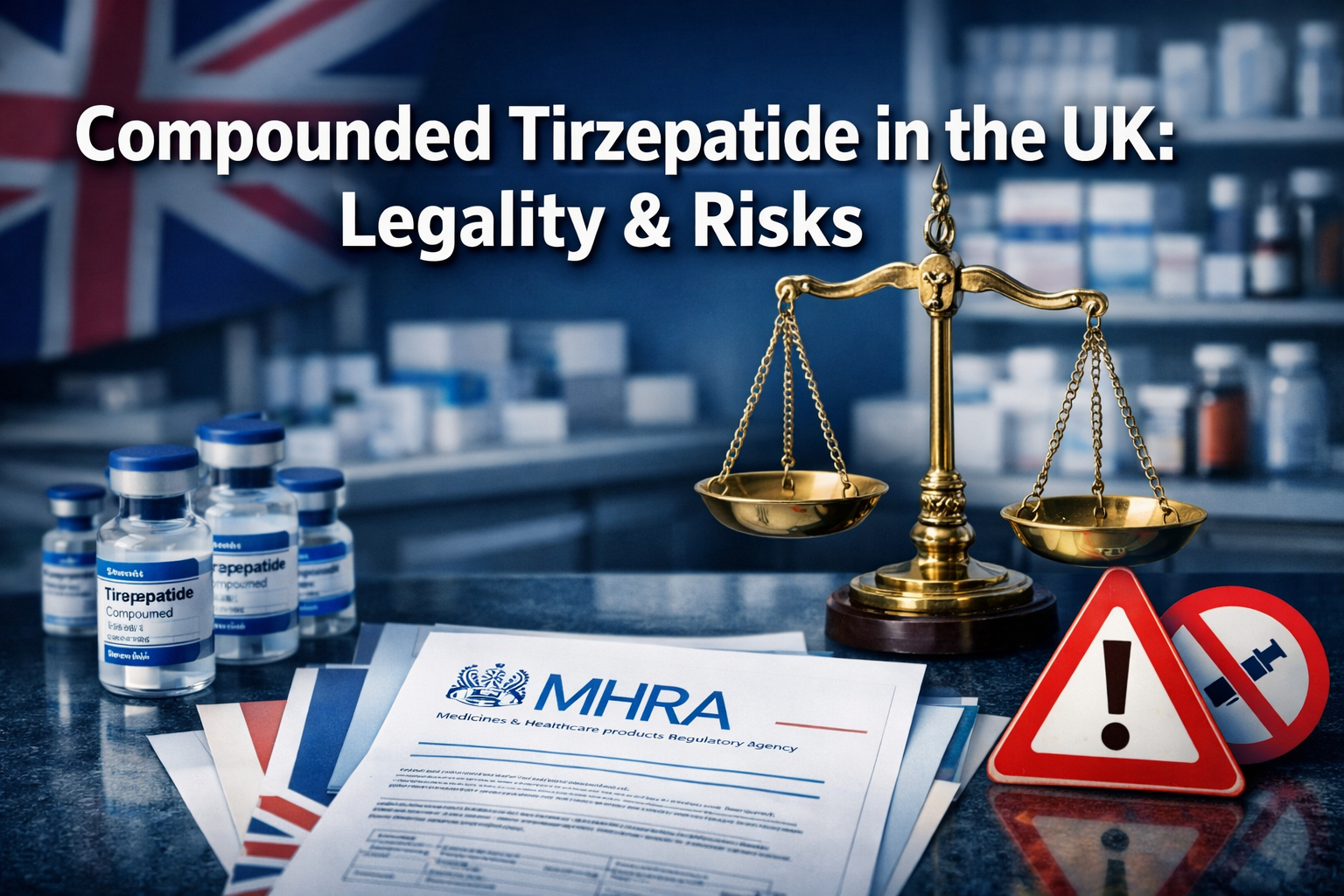
The surge in demand for weight-loss medications has created a shadow market that many consumers don’t fully understand—and the consequences could be severe. As tirzepatide gains recognition for its remarkable efficacy in managing type 2 diabetes and obesity, a concerning trend has emerged: the proliferation of compounded versions marketed as affordable alternatives to licensed medications. Compounded Tirzepatide in the UK: Legality & Risks represents a critical intersection of healthcare regulation, patient safety, and pharmaceutical law that every potential user must understand before making decisions that could impact their health and legal standing.
Unlike licensed medications that undergo rigorous testing and regulatory approval, compounded preparations exist in a grey area that many mistake for legitimacy. This comprehensive guide examines the legal framework governing compounded tirzepatide in the United Kingdom, the substantial health risks associated with unlicensed formulations, and the crucial distinctions between legitimate research-grade peptides and products marketed for human consumption.
Key Takeaways
- Compounded tirzepatide is not licensed for human use in the UK and falls outside the regulatory protections provided by the MHRA (Medicines and Healthcare products Regulatory Agency)
- Legal compounding exists only under strict conditions defined by the Human Medicines Regulations 2012, primarily for individualised patient needs when no licensed alternative exists
- Health risks of unregulated compounded tirzepatide include contamination, incorrect dosing, lack of stability data, and absence of safety monitoring
- Research-grade peptides from reputable suppliers like Peptide Pro are explicitly labelled “For Research Use Only” and are not intended for human consumption
- Using unlicensed medicines carries both legal and medical consequences, including lack of insurance coverage, regulatory penalties, and potentially serious adverse health outcomes
Understanding Tirzepatide: The Licensed Medication
Before examining the complexities surrounding Compounded Tirzepatide in the UK: Legality & Risks, it’s essential to understand what tirzepatide is and how it functions as a licensed pharmaceutical product.
What Is Tirzepatide?
Tirzepatide is a novel glucose-dependent insulinotropic polypeptide (GIP) and glucagon-like peptide-1 (GLP-1) receptor agonist. This dual-action mechanism distinguishes it from earlier GLP-1 receptor agonists like semaglutide. The medication was developed by Eli Lilly and is marketed under the brand name Mounjaro for type 2 diabetes management and Zepbound for chronic weight management.[1]
The peptide works through multiple pathways:
- Enhances insulin secretion in response to elevated blood glucose levels
- Suppresses glucagon release when blood sugar is high
- Slows gastric emptying, promoting satiety and reducing food intake
- Acts on brain appetite centres to decrease hunger signals
Licensed Status in the UK
In the United Kingdom, tirzepatide received regulatory approval from the MHRA in late 2022 for the treatment of type 2 diabetes mellitus. The medication is available through NHS prescription under specific clinical criteria and through private prescription from registered healthcare providers.[2]
Critically important: Only the licensed formulation—Mounjaro—has undergone the comprehensive testing required to demonstrate:
✅ Safety through extensive clinical trials
✅ Efficacy with documented outcomes
✅ Quality with consistent manufacturing standards
✅ Stability with proven shelf-life data
✅ Purity with verified absence of contaminants
This regulatory framework exists to protect patients from the substantial risks associated with unlicensed medications—risks that become particularly relevant when discussing compounded alternatives.
The Legal Framework: Compounded Tirzepatide in the UK
The question of Compounded Tirzepatide in the UK: Legality & Risks requires careful examination of pharmaceutical regulations that govern when and how medications may be compounded.
What Is Pharmaceutical Compounding?
Pharmaceutical compounding refers to the preparation of customised medications to meet individual patient needs. Historically, compounding served an essential role in healthcare when commercially available products couldn’t address specific requirements—such as:
- Patients with allergies to inactive ingredients in manufactured products
- Children requiring smaller doses than commercially available
- Patients needing alternative delivery methods (e.g., transdermal instead of oral)
- Medications that are temporarily unavailable due to supply shortages
UK Legal Requirements for Compounding
The Human Medicines Regulations 2012 establishes the legal framework for compounding in the UK.[3] Under these regulations, compounding is permitted only under strictly defined circumstances:
| Legal Requirement | Description |
|---|---|
| Individual patient need | Must be prepared for a specific named patient with a documented clinical need |
| Prescriber authorisation | Requires a prescription from an authorised healthcare professional |
| No licensed alternative | Can only be prepared when no suitable licensed product exists |
| Pharmacy supervision | Must be prepared in a registered pharmacy under pharmacist supervision |
| Quality standards | Must meet appropriate quality and safety standards |
| Documentation | Requires comprehensive records of preparation and supply |
Why Compounded Tirzepatide Fails Legal Tests
When examining Compounded Tirzepatide in the UK: Legality & Risks, the central legal issue becomes immediately apparent: a licensed alternative exists. Mounjaro is available through legitimate prescribing channels, which means the fundamental legal justification for compounding—absence of a licensed product—does not apply.
Furthermore, most compounded tirzepatide is not:
❌ Prepared for individually named patients
❌ Prescribed by registered UK healthcare professionals
❌ Manufactured in registered UK pharmacies
❌ Subject to quality assurance testing
❌ Accompanied by proper safety documentation
The legal reality: The vast majority of compounded tirzepatide available in the UK market operates outside the legal framework established by pharmaceutical regulations. This unlicensed status carries significant implications for both suppliers and users.
MHRA Position on Unlicensed Medicines
The MHRA has issued clear guidance regarding unlicensed medicines, including compounded preparations. According to the agency’s position:[4]
“Unlicensed medicines have not been assessed for quality, safety and efficacy through the UK licensing system and their use carries additional risk. They should only be used where there is a clear clinical need and no suitable licensed alternative.”
The MHRA actively monitors the market for unlicensed medicines and has the authority to:
- Issue warning letters to suppliers
- Seize unlicensed products
- Prosecute individuals or companies supplying unlicensed medicines
- Impose substantial fines and penalties
In 2024-2025, the MHRA increased enforcement activity specifically targeting unlicensed weight-loss medications, including compounded GLP-1 receptor agonists, in response to growing safety concerns.[5]
Health Risks of Compounded Tirzepatide
Beyond the legal considerations, Compounded Tirzepatide in the UK: Legality & Risks encompasses substantial health dangers that potential users must understand.
Lack of Quality Assurance
Licensed medications undergo rigorous quality control at every stage of production. Each batch is tested to verify:
- Correct active ingredient concentration
- Absence of contaminants (bacterial, chemical, particulate)
- Sterility for injectable products
- pH and osmolality appropriate for administration
- Stability throughout the product’s shelf life
Compounded preparations typically lack this comprehensive testing. Studies examining compounded medications have documented alarming quality issues:
- Potency variations ranging from 68% to 154% of stated concentration[6]
- Contamination with bacteria, endotoxins, and particulate matter
- Chemical degradation due to improper storage or formulation
- Incorrect pH levels causing tissue damage at injection sites
Contamination and Sterility Concerns
Injectable medications require sterile preparation to prevent serious infections. Licensed pharmaceutical manufacturing occurs in controlled cleanroom environments with:
- HEPA-filtered air systems
- Validated sterilisation processes
- Environmental monitoring for microbial contamination
- Aseptic technique protocols
- Regular quality audits
Most compounding operations lack these sophisticated controls. The consequences can be severe: fungal meningitis outbreaks linked to contaminated compounded injections have resulted in deaths and permanent disabilities in multiple countries.[7]
For tirzepatide specifically, which requires subcutaneous injection, contamination risks include:
⚠️ Injection site infections (cellulitis, abscesses)
⚠️ Systemic infections (sepsis, bacteremia)
⚠️ Allergic reactions to contaminants
⚠️ Tissue damage from improper formulation
Dosing Inconsistencies
Licensed tirzepatide (Mounjaro) is supplied in precisely calibrated pre-filled pens containing exact doses: 2.5mg, 5mg, 7.5mg, 10mg, 12.5mg, or 15mg. This precision is critical because tirzepatide follows a specific dose-escalation protocol designed to minimise side effects while optimising therapeutic benefits.
Compounded tirzepatide typically arrives as:
- Lyophilised powder requiring reconstitution
- Vials without precise dosing mechanisms
- Products requiring users to calculate and measure doses
This introduces multiple opportunities for error:
- Reconstitution errors: Incorrect volume of diluent changes concentration
- Measurement errors: Insulin syringes may not provide accurate measurement for the calculated dose
- Calculation errors: Converting between mg and mL introduces mistakes
- Degradation: Reconstituted product may degrade if not stored properly
Underdosing results in therapeutic failure—patients don’t achieve blood sugar control or weight loss. Overdosing increases the risk of serious adverse effects, including:
- Severe nausea and vomiting leading to dehydration
- Hypoglycaemia (dangerously low blood sugar)
- Acute pancreatitis
- Gallbladder complications
Absence of Safety Monitoring
Licensed medications are subject to ongoing pharmacovigilance—systematic monitoring for adverse effects that may not have been apparent during clinical trials. The MHRA operates the Yellow Card Scheme, which collects reports of suspected side effects and can trigger:
- Safety investigations
- Label updates with new warnings
- Dose recommendations changes
- Product recalls if necessary
Users of compounded tirzepatide operate outside this safety net. Adverse events may go unreported, patterns may not be detected, and users receive no updates about emerging safety concerns.
Unknown Long-Term Stability
Pharmaceutical stability testing determines how long a medication maintains its potency, purity, and safety under specified storage conditions. Licensed tirzepatide has undergone extensive stability studies establishing:
- Shelf life before reconstitution
- Storage temperature requirements
- Duration of stability after opening
- Protection from light requirements
Compounded preparations typically lack this data. Users cannot know:
- Whether the product has degraded during shipping
- How long reconstituted product remains effective
- What storage conditions are actually required
- Whether degradation products pose health risks
Research has demonstrated that peptides like tirzepatide are susceptible to degradation through multiple pathways, including:[8]
- Oxidation of methionine residues
- Deamidation of asparagine and glutamine
- Aggregation forming potentially immunogenic particles
- Hydrolysis breaking peptide bonds
Without stability data, users of compounded tirzepatide may be injecting degraded, ineffective, or potentially harmful products.
Research-Grade Peptides: A Legitimate Alternative
Understanding Compounded Tirzepatide in the UK: Legality & Risks requires distinguishing between unlicensed products marketed for human use and legitimate research-grade materials supplied for scientific purposes.
The Research Peptide Market
Reputable suppliers like Peptide Pro operate within a clearly defined legal and ethical framework, providing high-purity peptides explicitly for research applications. These products serve essential roles in:
- Academic research investigating peptide mechanisms and therapeutic potential
- Pharmaceutical development during early-stage drug discovery
- Biochemical studies examining protein interactions and functions
- Quality control as reference standards
Critical Distinctions
Research-grade peptides differ fundamentally from medications in several key aspects:
| Aspect | Research-Grade Peptides | Licensed Medications |
|---|---|---|
| Intended use | Laboratory research only | Human medical treatment |
| Regulatory status | Not medicines; not for human use | MHRA-approved for specific indications |
| Labelling | “For Research Use Only” | Full prescribing information |
| Quality standards | High purity for research reliability | GMP manufacturing for human safety |
| Safety data | Not required for research materials | Extensive clinical trial data |
| Prescription | Not applicable | Required from registered prescriber |
Responsible Supply Practices
Legitimate research peptide suppliers implement several safeguards to ensure products are used appropriately:
✓ Clear labelling: “For Research Use Only – Not for Human or Animal Consumption”
✓ Terms of service: Explicit prohibition against human use
✓ Customer verification: Screening to identify research credentials
✓ Educational resources: Information about proper handling and storage for research purposes
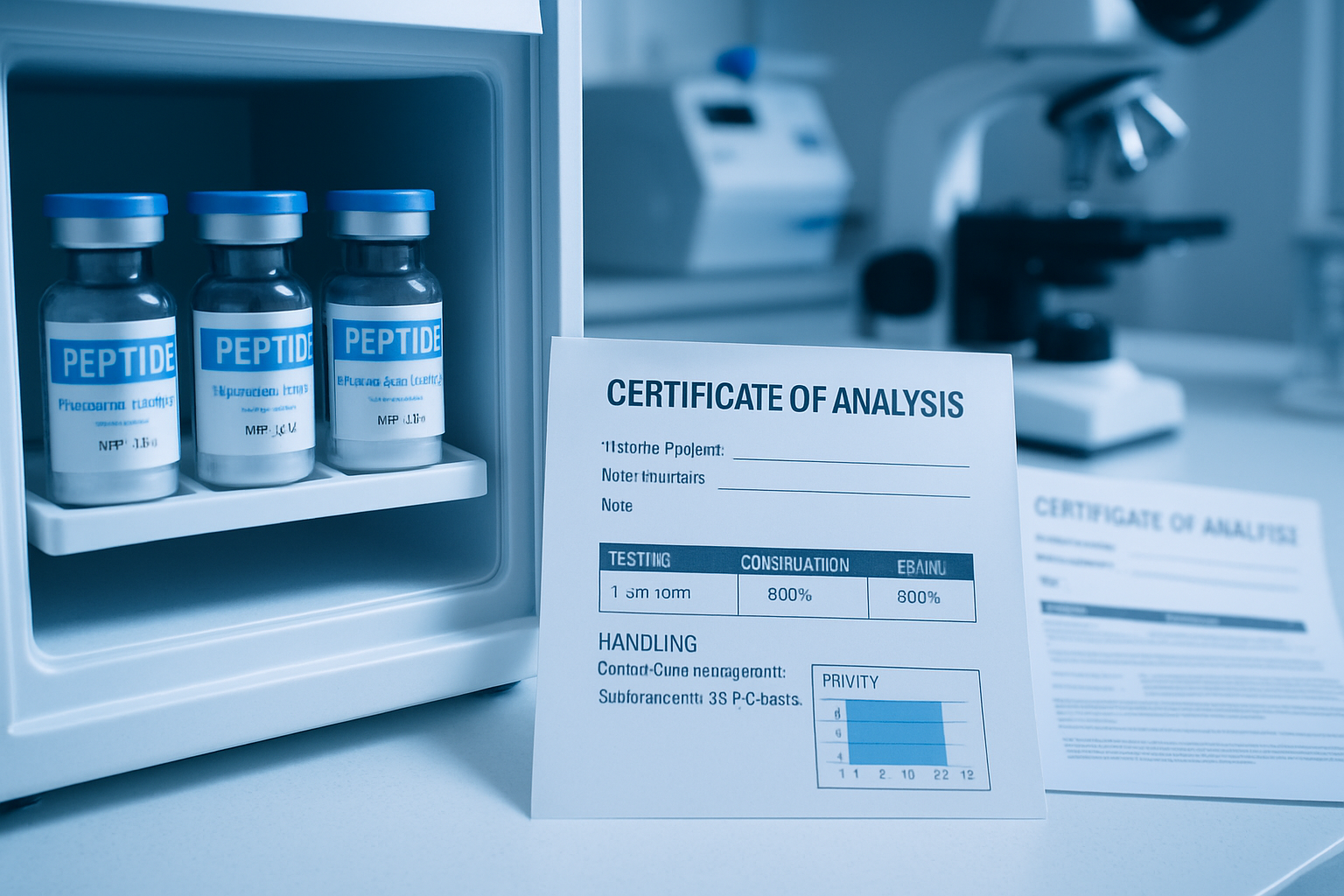
✓ Certificates of Analysis: Documentation of purity and composition
Peptide Pro exemplifies these responsible practices, providing researchers with high-purity compounds accompanied by comprehensive documentation while maintaining clear boundaries regarding appropriate use.
The Misuse Problem
Unfortunately, some individuals purchase research-grade peptides with the intention of using them for self-administration. This practice is:
❌ Illegal (using unlicensed medicines)
❌ Dangerous (products not formulated or tested for human use)
❌ Unethical (violating supplier terms of service)
❌ Uninsured (no liability coverage for adverse events)
Responsible suppliers actively discourage this misuse through clear communication and, where possible, verification of legitimate research purposes.
Regulatory Enforcement and Legal Consequences
The discussion of Compounded Tirzepatide in the UK: Legality & Risks must address the practical legal consequences for those who supply or use unlicensed preparations.
Supplier Liability
Individuals or companies supplying unlicensed medicines in the UK face significant legal exposure under the Human Medicines Regulations 2012. Offences include:
- Selling or supplying unlicensed medicinal products (Regulation 8)
- Manufacturing without appropriate authorisation (Regulation 17)
- Failing to meet safety and quality standards (Regulation 46)
- Misleading advertising of medicines (Regulation 284)
Penalties can include:
- Unlimited fines
- Up to two years imprisonment
- Seizure of products and equipment
- Prohibition orders preventing future pharmaceutical activities
The MHRA has successfully prosecuted numerous cases involving unlicensed medicines, with particular focus on products marketed for weight loss given the high consumer demand and associated risks.[9]
User Risks
While enforcement primarily targets suppliers rather than individual users, those who obtain and use compounded tirzepatide face several consequences:
Medical risks (as detailed in previous sections)
Financial risks:
- No insurance coverage for adverse events
- No recourse if product is ineffective
- Potential loss of investment in counterfeit or substandard products
Legal risks:
- Importation of unlicensed medicines may violate customs regulations
- Possession of large quantities could suggest intent to supply
- Professional consequences for healthcare workers using unlicensed medicines
Lack of medical support:
- Difficulty obtaining appropriate medical care if complications arise
- Healthcare providers may be reluctant to treat complications from unlicensed products
- No access to manufacturer support or product information
The Customs Dimension
Many compounded tirzepatide products are sourced internationally, particularly from countries with less stringent pharmaceutical regulations. UK customs and border control have authority to:
- Seize unlicensed medicines at the border
- Impose penalties for illegal importation
- Share information with MHRA for enforcement action
The MHRA works closely with Border Force to intercept unlicensed medicines, with particular attention to injectable products and those marketed for weight loss.[10]
Making Safe and Legal Choices
Given the complexities surrounding Compounded Tirzepatide in the UK: Legality & Risks, individuals seeking tirzepatide therapy should understand their legitimate options.
Obtaining Licensed Tirzepatide
The safe and legal pathway to tirzepatide treatment involves:
- Consultation with a registered healthcare provider (GP or specialist)
- Clinical assessment to determine appropriateness
- Prescription for licensed Mounjaro if clinically indicated
- Dispensing from a registered UK pharmacy
- Ongoing monitoring for efficacy and safety
NHS availability: Tirzepatide is available through NHS prescription for type 2 diabetes when specific criteria are met, following NICE guidance.[11]
Private prescription: For those who don’t meet NHS criteria or prefer private care, registered UK prescribers can provide private prescriptions for licensed tirzepatide, dispensed through registered pharmacies.
Red Flags for Unlicensed Products
When evaluating tirzepatide sources, the following indicate unlicensed, potentially dangerous products:
🚩 Significantly lower price than licensed Mounjaro
🚩 No prescription required or “online prescription” included
🚩 Supplied as powder requiring reconstitution rather than pre-filled pens
🚩 Generic “tirzepatide” rather than brand name Mounjaro
🚩 International shipping from non-EU countries
🚩 Marketing claims not supported by licensed indications
🚩 Lack of patient information leaflet or prescribing information
🚩 No pharmacy registration number or MHRA licensing information
Alternative Evidence-Based Approaches
For individuals seeking weight management or metabolic health improvements who don’t qualify for tirzepatide or prefer alternative approaches:
Lifestyle interventions:
- Structured dietary programs with professional support
- Regular physical activity tailored to individual capacity
- Behavioural therapy addressing eating patterns
- Sleep optimisation and stress management
Other licensed medications:
- Orlistat (available over-the-counter and on prescription)
- Naltrexone-bupropion combination (prescription)
- Semaglutide (Wegovy) for weight management (prescription)
Surgical options:
- Bariatric surgery for those meeting clinical criteria
- Endoscopic procedures in specialist centres
All these approaches should be discussed with qualified healthcare providers who can assess individual circumstances and recommend appropriate interventions.
The Research Context: Why Research-Grade Peptides Matter
While this article focuses on Compounded Tirzepatide in the UK: Legality & Risks regarding human use, it’s important to acknowledge the legitimate role of research-grade peptides in advancing scientific knowledge.
Scientific Investigation
Research-grade tirzepatide and related peptides serve crucial functions in:
Mechanistic studies: Understanding how GIP/GLP-1 receptor agonists affect cellular signalling, metabolism, and appetite regulation
Drug development: Investigating structural modifications that might improve efficacy, duration of action, or side effect profiles
Comparative research: Examining differences between various incretin-based therapies
Bioanalytical method development: Creating assays to measure peptide concentrations in biological samples
Quality Requirements for Research
Reliable scientific research demands high-purity starting materials. Research-grade peptides from reputable suppliers typically offer:
- Purity >95% verified by HPLC (High-Performance Liquid Chromatography)
- Identity confirmation through mass spectrometry
- Certificates of Analysis documenting composition
- Proper storage to maintain stability
- Batch consistency for reproducible experiments
These quality standards ensure that research findings are attributable to the peptide being studied rather than contaminants or degradation products.
Ethical Research Conduct
Legitimate scientific research involving peptides like tirzepatide operates under strict ethical frameworks:
- Institutional review by ethics committees
- Regulatory approval for any studies involving human or animal subjects
- Informed consent from research participants
- Safety monitoring throughout studies
- Transparent reporting of methods and results
This stands in stark contrast to individuals self-experimenting with compounded or research-grade peptides outside any ethical oversight or safety framework.
International Perspectives on Compounding
While this article focuses on Compounded Tirzepatide in the UK: Legality & Risks, examining international approaches provides useful context.
United States
The US has experienced significant controversy regarding compounded GLP-1 receptor agonists. The FDA permits compounding under specific circumstances defined by the Federal Food, Drug, and Cosmetic Act, but has issued warnings about:[12]
- Quality concerns with compounded semaglutide and tirzepatide
- Adverse events reported with compounded versions
- Counterfeit products misrepresenting their source
- Compounding during drug shortages (which may not apply to tirzepatide)
The FDA’s position emphasises that compounded drugs are not FDA-approved and lack the safety and efficacy guarantees of licensed products.
European Union
EU regulations generally align with UK approaches, requiring that compounded preparations:
- Meet individual patient needs
- Are prepared only when no licensed alternative exists
- Comply with Good Manufacturing Practice adapted for compounding
- Are prepared under pharmaceutical supervision
The European Medicines Agency (EMA) has issued guidance emphasising that widespread compounding of products for which licensed alternatives exist undermines pharmaceutical regulation and patient safety.[13]
Australia
The Therapeutic Goods Administration (TGA) in Australia has taken a particularly firm stance on compounded weight-loss medications, issuing multiple warnings about:
- Unregistered compounded semaglutide and tirzepatide
- Online suppliers operating illegally
- Health risks from unlicensed products
- Enforcement action against non-compliant suppliers
The TGA’s approach demonstrates increasing global regulatory attention to this issue.
The Future Landscape
As demand for effective weight-loss medications continues to grow, the issues surrounding Compounded Tirzepatide in the UK: Legality & Risks will likely evolve.
Anticipated Regulatory Developments
Several trends suggest increased regulatory scrutiny:
Enhanced enforcement: MHRA has indicated that unlicensed weight-loss medications represent a priority area for enforcement activity in 2025 and beyond.
International cooperation: Regulatory agencies are increasingly collaborating to address cross-border supply of unlicensed medicines.
Online marketplace regulation: Platforms hosting sellers of pharmaceutical products face growing pressure to verify legitimacy and remove unlicensed offerings.
Professional accountability: Healthcare professionals who facilitate access to unlicensed medicines may face increased scrutiny from regulatory bodies like the General Medical Council (GMC) and General Pharmaceutical Council (GPhC).
Improving Access to Licensed Products
Addressing the demand that drives interest in compounded alternatives requires:
Expanded NHS access: Ongoing review of eligibility criteria for licensed weight-loss medications
Price negotiations: Efforts to make licensed products more affordable through negotiated pricing
Alternative formulations: Development of lower-cost licensed versions as patents expire
Comprehensive weight management services: Integration of medication with lifestyle support, psychological services, and long-term monitoring
Advancing Research
Continued scientific investigation using properly sourced research-grade materials will contribute to:
- Next-generation incretin-based therapies with improved profiles
- Better understanding of individual variation in response
- Identification of biomarkers predicting treatment success
- Development of combination approaches for enhanced efficacy
This legitimate research pathway stands in stark contrast to uncontrolled self-experimentation with compounded products.
The examination of Compounded Tirzepatide in the UK: Legality & Risks reveals a complex landscape where consumer demand intersects with pharmaceutical regulation, patient safety, and legal frameworks. The key conclusions are unambiguous:
Legal status: Compounded tirzepatide, as commonly available in the UK market, operates outside the legal framework established by the Human Medicines Regulations 2012. The existence of licensed Mounjaro eliminates the fundamental justification for compounding, and most compounded products fail to meet the strict requirements that would permit legal compounding in exceptional circumstances.
Health risks: Unlicensed compounded tirzepatide carries substantial dangers including contamination, dosing inconsistencies, unknown stability, and absence of safety monitoring. These risks are not theoretical—they represent documented problems with compounded medications that have resulted in serious adverse outcomes.
Legitimate alternatives: Safe and legal access to tirzepatide exists through consultation with registered healthcare providers, prescription of licensed Mounjaro, and dispensing from registered pharmacies. For those seeking weight management, multiple evidence-based approaches are available.
Research context: High-purity research-grade peptides from responsible suppliers like Peptide Pro serve essential scientific purposes but are explicitly not intended for human consumption. Clear labelling, terms of service, and ethical boundaries distinguish legitimate research supply from products marketed for human use.
Actionable Next Steps
For individuals considering tirzepatide therapy:
- Consult a registered healthcare provider to discuss whether tirzepatide is clinically appropriate for your circumstances
- Obtain licensed medication through legitimate prescription and pharmacy channels if treatment is indicated
- Avoid compounded alternatives regardless of cost savings or convenience claims
- Report unlicensed products to the MHRA if you encounter suppliers marketing compounded tirzepatide for human use
- Seek comprehensive support including dietary counselling, physical activity guidance, and behavioural interventions alongside any medication
For researchers requiring peptides for legitimate scientific investigation:
- Source from reputable suppliers with clear quality documentation and appropriate terms of service
- Verify purity and identity through Certificates of Analysis
- Maintain proper storage according to supplier recommendations
- Operate within ethical frameworks with appropriate institutional oversight
- Document methods transparently to support reproducible science
The promise of tirzepatide as a therapeutic agent is substantial, supported by rigorous clinical evidence demonstrating significant benefits for metabolic health and weight management. However, these benefits are realised safely only when the medication is obtained through legitimate channels, prescribed appropriately, and monitored by qualified healthcare professionals.
The risks associated with compounded alternatives—legal, medical, and financial—far outweigh any perceived advantages. As regulatory enforcement intensifies and awareness grows, the market for unlicensed compounded tirzepatide will hopefully diminish, protecting consumers from products that promise much but deliver primarily risk.
Making informed, safe, and legal choices about weight management and metabolic health requires understanding the complex landscape surrounding Compounded Tirzepatide in the UK: Legality & Risks. Armed with this knowledge, individuals can navigate toward evidence-based approaches that genuinely support health and wellbeing within appropriate regulatory and medical frameworks.
References
[1] Frias JP, et al. “Tirzepatide versus Semaglutide Once Weekly in Patients with Type 2 Diabetes.” New England Journal of Medicine 2021;385:503-515.
[2] Medicines and Healthcare products Regulatory Agency. “Mounjaro (tirzepatide) authorisation details.” UK Public Assessment Report, 2022.
[3] UK Government. “The Human Medicines Regulations 2012.” Statutory Instrument 2012 No. 1916.
[4] MHRA. “Guidance on the use of unlicensed medicines in the UK.” Updated guidance document, 2023.
[5] MHRA. “Enforcement Report: Unlicensed Weight-Loss Medications.” Annual enforcement summary, 2024.
[6] Gudeman J, et al. “Potential Risks of Pharmacy Compounding.” Drugs in R&D 2013;13(1):1-8.
[7] CDC. “Multistate Outbreak of Fungal Meningitis and Other Infections.” Investigation report, 2012-2013.
[8] Manning MC, et al. “Stability of Protein Pharmaceuticals: An Update.” Pharmaceutical Research 2010;27(4):544-575.
[9] MHRA. “Prosecution case summaries: Unlicensed medicines.” Published enforcement outcomes, 2020-2024.
[10] UK Border Force. “Prohibited and Restricted Goods: Medicines.” Import regulations guidance, 2024.
[11] National Institute for Health and Care Excellence. “Type 2 diabetes in adults: management.” NICE guideline NG28, updated 2024.
[12] US Food and Drug Administration. “FDA Warns Consumers About Compounded Semaglutide and Tirzepatide.” Safety communication, 2024.
[13] European Medicines Agency. “Guideline on the quality of compounded medicinal products.” EMA/CHMP guidance document, 2023.