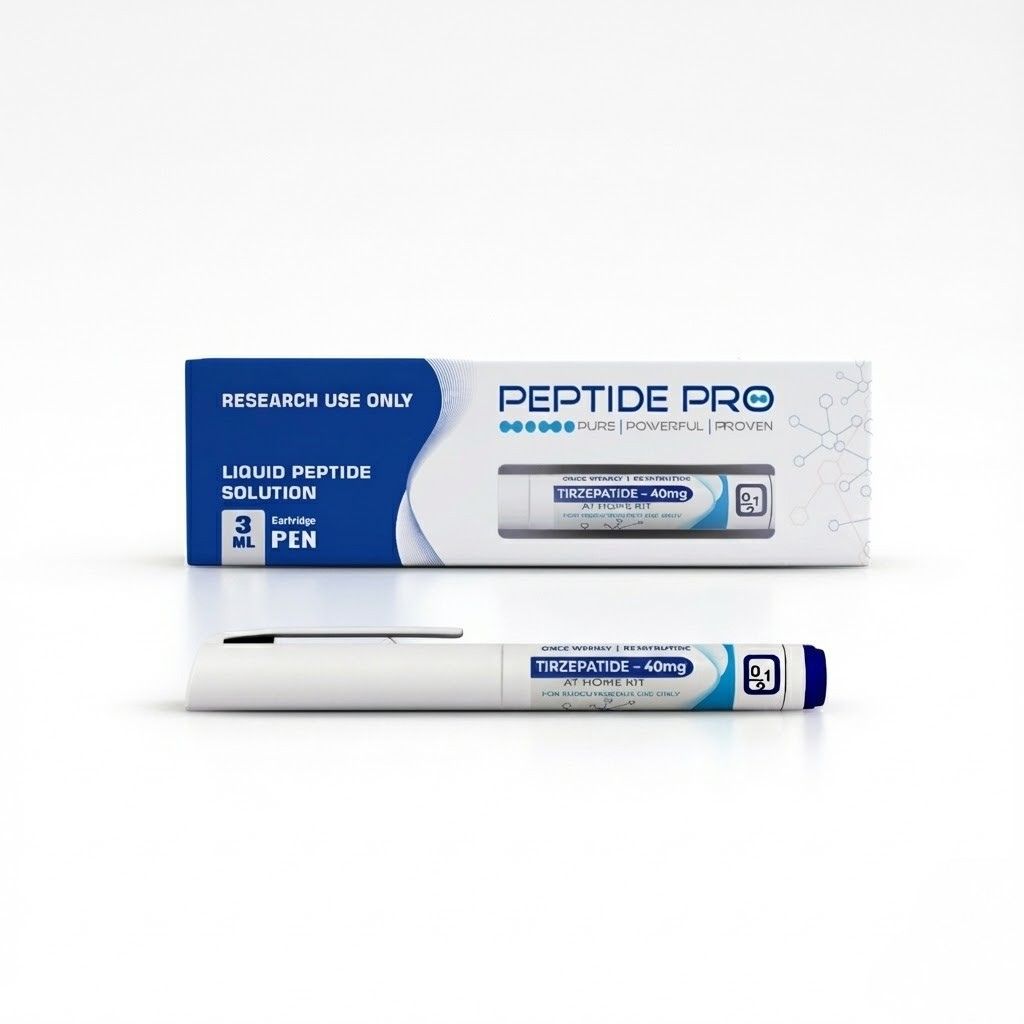
| Specification | Detail |
| Category | Incretin Mimetics & Metabolic Maintenance |
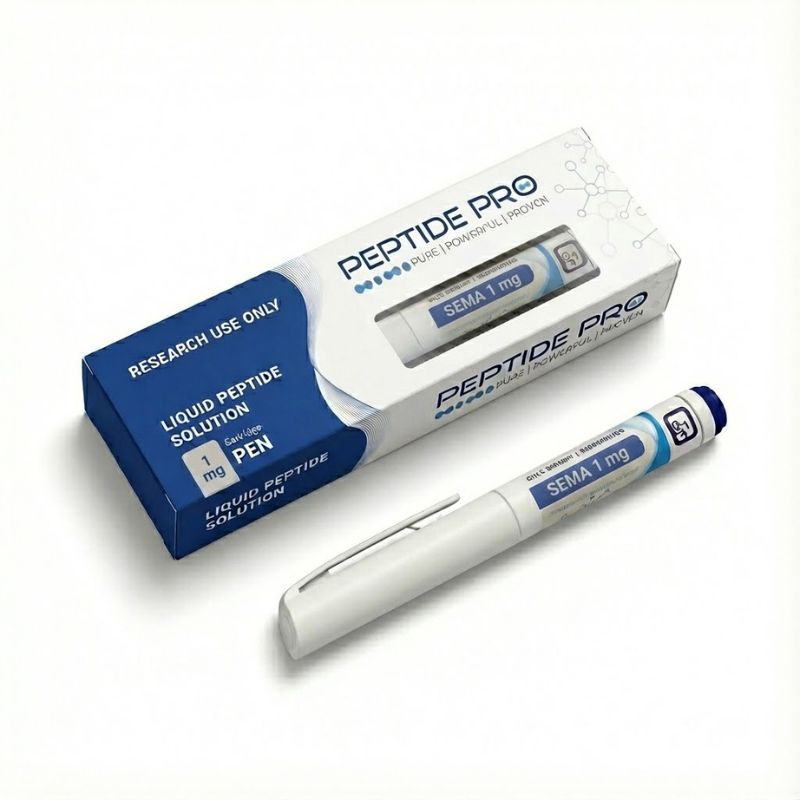
| Product Name | Semaglutide (Standard Grade) |
| Concentration | Formulated for 1.0mg Dosing Protocols |
| Formulation | Sterile Lyophilised Solution in Bacteriostatic Water |
| Delivery Method | 3ml Precision Reconstituted Pen |
| CAS Number | 910463-68-2 |
| Molecular Formula | $C_{187}H_{291}N_{45}O_{59}$ |
| Molecular Weight | $\approx 4113.58 \text{ g/mol}$ |
| Purity | >99% (HPLC Analysis) |
£179.00
Abstract The Semaglutide 1mg peptide pen represents the established “Standard Maintenance” reagent for GLP-1 receptor agonist research. Following successful escalation through the 0.25mg and 0.5mg induction phases, this 1mg formulation allows researchers to achieve and sustain steady-state plasma concentrations associated with significant metabolic efficacy. Semaglutide is a modified human GLP-1 analogue, stabilized against DPP-IV enzymatic degradation via an Aib substitution at position 8 and acylated with a C18 fatty diacid to permit albumin binding. This 1mg concentration is the primary benchmark for investigating long-term glycaemic control (HbA1c reduction), moderate weight loss stabilization, and the improvement of insulin sensitivity in models of Type 2 Diabetes and Metabolic Syndrome.
Primary Biological Pathway: Steady-State Glycaemic Control The 1mg dose is the gold standard for evaluating efficacy in diabetic models. At this concentration, Semaglutide provides sustained agonism of pancreatic GLP-1 receptors, enhancing glucose-dependent insulin secretion while robustly suppressing hepatic glucose production via glucagon inhibition. Research utilizing this pen focuses on the reduction of HbA1c (glycated haemoglobin), utilizing the 1mg dose to model the “normalization” of blood glucose levels over 12-24 week protocols without the risk of hypoglycaemia common to insulin therapy.
Secondary Research Finding: Liver Health and Lipotoxicity Semaglutide 1mg is extensively researched for its hepatoprotective effects. It reduces the influx of fatty acids to the liver and promotes the clearance of ectopic lipids. The 1mg pen is the standard reagent for models of Non-Alcoholic Fatty Liver Disease (NAFLD), where researchers quantify the reduction in hepatic steatosis and ballooning degeneration. The hypothesis is that correcting the metabolic milieu at this dosage prevents the progression from simple fatty liver to steatohepatitis (NASH).
Tertiary Research Finding: Anti-Atherogenic Inflammation Beyond blood sugar, the 1mg dose exerts systemic anti-inflammatory effects. It reduces circulating markers of vascular inflammation such as CRP and PAI-1. Researchers use this formulation in cardiovascular outcome studies to investigate plaque stability. The 1mg maintenance dose allows for the assessment of whether long-term GLP-1 exposure can alter the phenotype of macrophages within arterial walls, promoting a shift from pro-inflammatory (M1) to anti-inflammatory (M2) states.
Long-term Genomic and Safety Observations A key area of 1mg research is Gastrointestinal Adaptation. While the 0.25mg/0.5mg phases induce tolerance, the 1mg maintenance phase is where long-term tolerability is assessed. Studies utilize this pen to monitor the expression of intestinal adaptation genes and to verify that gastric emptying rates, which are initially delayed, eventually normalize (tachyphylaxis) while the appetite-suppressant effects persist.
Purity: Validated at >99+% via High-Performance Liquid Chromatography (HPLC). We strictly control the synthesis to ensure that the C18 fatty acid chain is correctly conjugated at Lysine-26, as free peptide without this modification is rapidly cleared by the kidneys (t1/2<5 mins).
Appearance: The 3ml pen contains a clear, colourless, sterile liquid.
Precision: The pen delivery system is calibrated for standard maintenance dosing. It provides the reliability needed for chronic, repeated administration (e.g., weekly for 6 months), ensuring that the cumulative drug load remains consistent across the entire study cohort.
Storage: The product must be stored at 2∘C to 8∘C.
Refrigeration and Shelf Life The Semaglutide 1mg Pen contains an acylated peptide that requires a stable thermal environment. Refrigeration (2∘C to 8∘C) is mandatory. The shelf life is 12 months in the sealed state. Once the pen is accessed, the bacteriostatic environment preserves the solution for 28 days. Researchers should avoid leaving the pen at room temperature on the benchtop for extended periods during dosing sessions.
Shipping Stability We utilize medical-grade thermal packaging. The peptide is stable for up to 72 hours at ambient UK temperatures. However, to preserve the optimal bioactivity of the fatty-acid modified construct, we strongly recommend selecting the fastest available shipping option.
Freezing Warning Strictly avoid freezing. Freezing causes the hydrophobic fatty acid chains to aggregate. Upon thawing, the solution will likely appear cloudy or contain micro-precipitates. Injecting a compromised solution will lead to sub-therapeutic plasma levels and invalid HbA1c data. A frozen pen must be discarded.
The Semaglutide 1mg Pen is the specialized tool for Chronic Maintenance Research. Using multiple smaller pens for a long-term study is inefficient and increases variability. Conversely, using a high-concentration 2mg pen for a 1mg dose can lead to wastage if the pen expires before the volume is consumed.
Our 1mg pen fits the “Goldilocks” zone. It provides exactly the capacity needed for standard weekly maintenance protocols, ensuring that your diabetic or metabolic syndrome models are treated with a consistent, sterile, and concentration-verified reagent throughout the duration of the experiment.
For researchers comparing efficacy across the spectrum, we recommend examining:
Semaglutide 0.5mg Pen: (For the Escalation phase).
Semaglutide 2mg Pen: (For Maximal Weight Loss / Ceiling Effect research).
Tirzepatide 20mg: (To compare GLP-1 Mono-agonist vs. Dual-agonist efficacy).
This product is strictly for Research Use Only (RUO). It is not intended for human consumption, injection (e.g., for diabetes control or weight management), therapeutic use, or diagnostic procedures. The information provided is for educational and scientific reference only. Purchase is restricted to verified research institutions and qualified individuals. Any evidence of intended misuse for human application will result in immediate order cancellation and blacklisting, in compliance with UK research chemical regulations.
Explore our high-purity compounds — including Retatide (Retatrutide 30 mg), Semaglutide, and more.
Fast UK shipping. Lab-tested quality. Strictly for research use only.