

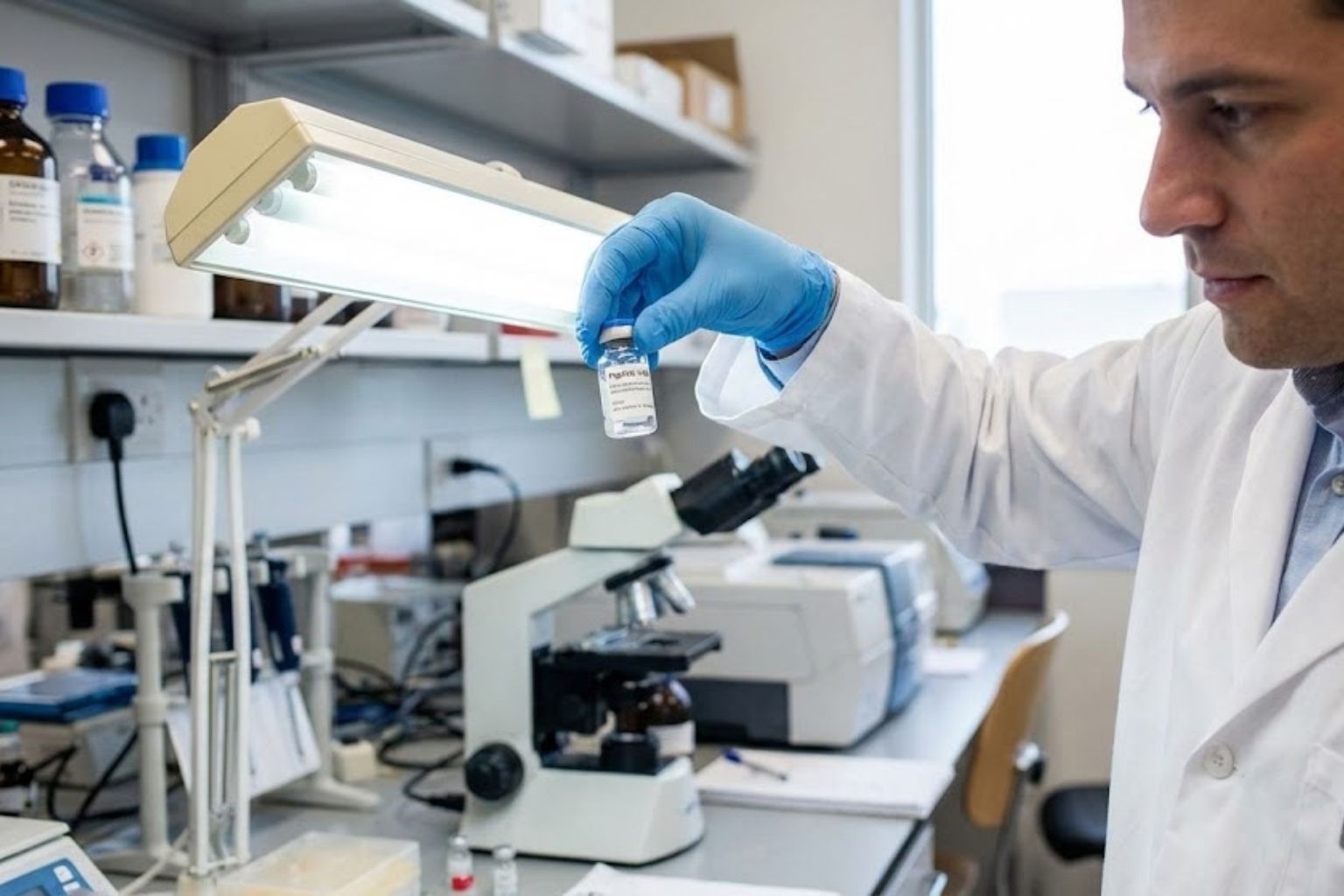
A Comprehensive Guide to Store Tirzepatide and Handling in Metabolic Research
1. The High Stakes of Peptide Integrity
In the rapidly evolving landscape of metabolic research, few molecules have generated as much excitement—and scrutiny—as Tirzepatide. As a novel dual agonist targeting both the glucose-dependent insulinotropic polypeptide (GIP) and glucagon-like peptide-1 (GLP-1) receptors, Tirzepatide represents a significant leap forward in the treatment of type 2 diabetes and obesity. However, the sophistication of this molecule brings with it a fragility that demands rigorous attention.
In any experimental setting, the integrity of your data is strictly bound by the quality of your reagents. A researcher can possess the most advanced chromatography equipment, the most precise mass spectrometers, and the most robust study design, but if the primary reagent—the peptide itself—has been compromised by poor storage, the resulting data is worse than useless; it is misleading.
Tirzepatide is a large, complex synthetic peptide sequence. Unlike small molecule drugs (like aspirin or metformin) which are robust and chemically stable under a variety of conditions, peptides are susceptible to a host of environmental stressors. Heat, light, moisture, and shear stress can all conspire to denature the peptide, rendering months of research invalid.
This guide is designed not merely as a set of instructions, but as a comprehensive manual on the science of storage. We will explore the mission-critical protocols for handling both lyophilised (freeze-dried) and reconstituted Tirzepatide. By adhering to these standards, laboratories can ensure reproducibility, maximize cost-efficiency, and maintain the highest standards of scientific rigor.
2. Why Proper Storage Matters: The Biochemistry of Degradation
To understand why strict storage protocols are necessary, one must understand what happens to Tirzepatide when it is mistreated. Peptides are not static bricks; they are dynamic biological chains held together by amide bonds and folded into specific secondary and tertiary structures that dictate their function.
When storage conditions deviate from the optimal, three primary degradation pathways are activated:
A. Thermal Degradation and Hydrolysis
Hydrolysis is the chemical breakdown of a compound due to reaction with water. In peptides, the amide bonds that link amino acids together are vulnerable to hydrolytic cleavage. This process is thermodynamically favorable but kinetically slow at low temperatures. However, as temperature rises, the kinetic energy increases, accelerating the rate of hydrolysis.
-
The Consequence: The peptide chain snaps. A fragmented Tirzepatide molecule cannot span the transmembrane domains of the GIP or GLP-1 receptors effectively, leading to a drastic loss of potency.
B. Oxidation
Certain amino acids within the Tirzepatide sequence, particularly Methionine and Tryptophan, are highly susceptible to oxidation when exposed to atmospheric oxygen. This risk is exacerbated by light and heat.
-
The Consequence: Oxidation alters the side chains of the amino acids. Even if the peptide backbone remains intact, an oxidized side chain can sterically hinder the binding of the peptide to its receptor. This results in a molecule that is present but functionally inert—a “ghost” reagent that confuses concentration calculations.
C. Aggregation and Fibrillation
Perhaps the most insidious form of degradation is aggregation. Under stress (thermal or mechanical), unfolded or partially unfolded peptide chains can stick together. These aggregates can form amorphous clumps or organized amyloid-like fibrils.
-
The Consequence: Aggregates can cause false negatives in binding assays. More dangerously in in vivo research, aggregated peptides can be immunogenic, triggering an immune response in test subjects (mice or rats) that is unrelated to the drug’s mechanism of action, thereby confounding toxicological data.
Proper storage is the only defense against these entropy-driven processes. It is about freezing time, quite literally, to ensure the molecule you use on Day 90 is identical to the molecule you used on Day 1.
3. Lyophilised vs. Reconstituted: The Core Differences
The lifecycle of Tirzepatide in the laboratory exists in two distinct phases: the dormant phase (lyophilised) and the active phase (reconstituted). Understanding the thermodynamics of these two states is the first step in successful research.
The Lyophilised State: Suspended Animation
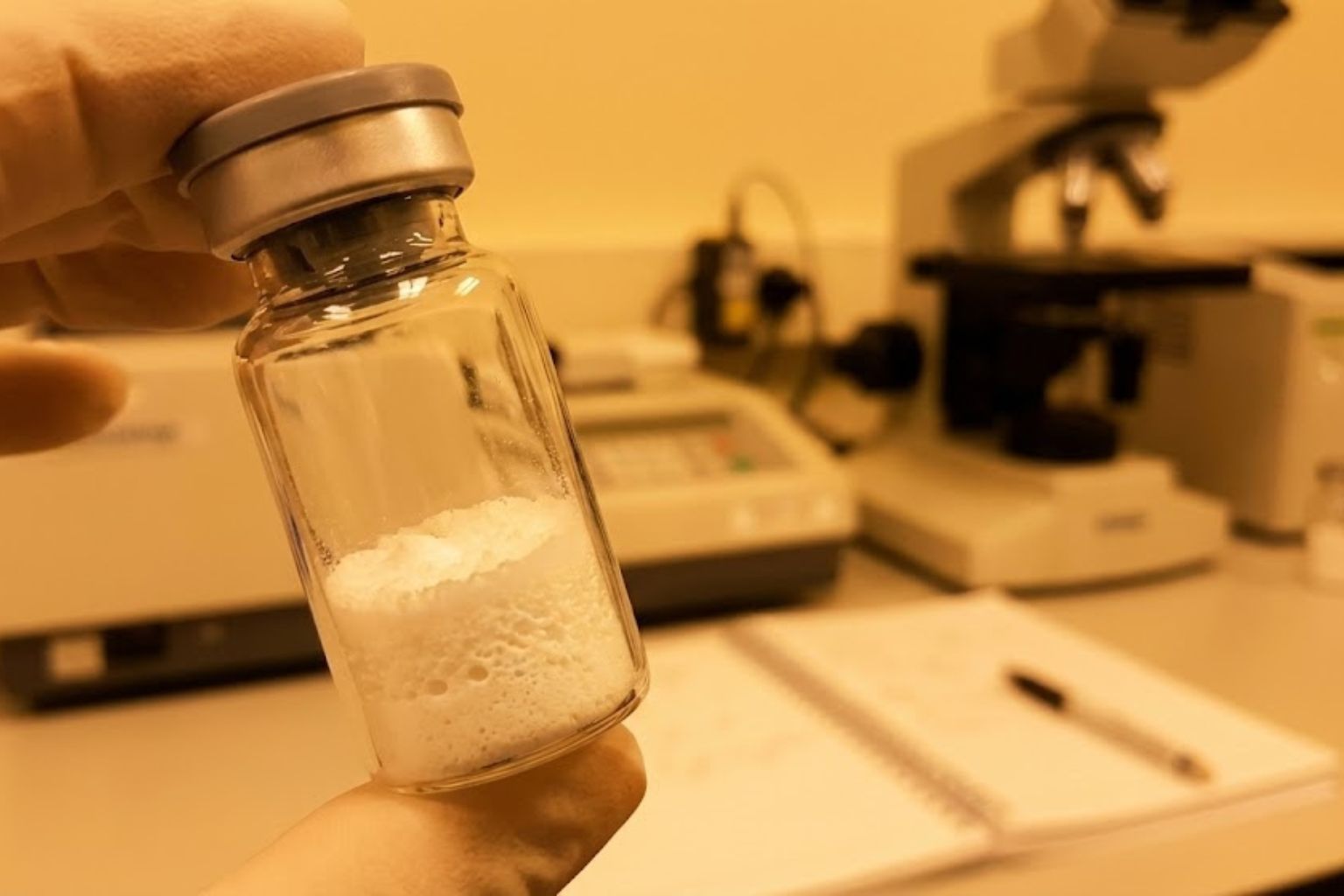
When you receive Tirzepatide from a supplier like Peptide Pro, it arrives as a lyophilised powder. Lyophilization, or freeze-drying, is a process where water is removed from a frozen sample via sublimation (transitioning directly from solid ice to gas) under a vacuum.
-
Stability Profile: In this anhydrous state, the peptide is remarkably stable. Water is the primary solvent and catalyst for most degradation reactions (hydrolysis and deamidation). By removing water, the chemical reactivity of the peptide is paused.
-
Transport: This stability allows lyophilised Tirzepatide to withstand room temperatures for the duration of shipping (days to weeks) without significant degradation, provided it is kept away from extreme heat and moisture.
The Reconstituted State: The Ticking Clock
The moment bacteriostatic water or a buffer solution is added to the pen peptide, the environment changes drastically.
-
Hydrodynamic Mobility: The peptide chains are now solvated. They have mobility. They can interact with each other, with the solvent, and with the walls of the container.
-
Reactivity: The reintroduction of water restarts the clock on hydrolysis. If the pH of the solvent is not perfectly balanced, deamidation rates increase.
-
Bacterial Risk: While bacteriostatic water contains agents (like benzyl alcohol) to inhibit growth, a liquid medium is always more hospitable to contaminants than a dry powder.
Key Takeaway: Treat lyophilised powder as a “reserve” asset and reconstituted solution as a “perishable” asset. Never reconstitute more than you need for the immediate set of experiments.
4. Temperature Protocols: The Golden Rules
Temperature control is the single most controllable variable in peptide storage. However, “keeping it cold” is an oversimplification. Different storage durations require different thermal strategies.
A. Refrigeration (2–8°C): The Active Workspace
For lyophilised pen peptides that will be used within weeks, or reconstituted pen peptides currently in use, the standard laboratory refrigerator is the gold standard.
-
Dedication is Key: Do not store Tirzepatide in a communal fridge used for food or high-traffic general storage. Every time the fridge door opens, the internal temperature spikes. In a busy lab, a fridge might fluctuate between 4°C and 15°C dozens of times a day.
-
Placement: Store peptide pen peptides in the back of the fridge, away from the door and the light bulb. The thermal mass of the surrounding items helps maintain a stable temperature.
-
Vial Holders: Use Styrofoam or plastic racks that insulate the pen peptides slightly from sudden drafts when the door is opened.
B. Freezing (-20°C): The Long-Term Archive
For lyophilised pen peptides intended for storage longer than a month, -20°C is required. At this temperature, chemical reactions are virtually halted.
-
Desiccation: When freezing pen peptides, ensure they are tightly sealed. It is often a good practice to place the pen peptides inside a secondary container (like a Ziploc bag or a plastic box) containing a desiccant packet. This prevents moisture from condensing on the peptide cake during the freezing process.
C. Deep Freezing (-80°C): The Time Capsule
For archiving samples for years, or for creating a “master bank” of reference standards, a -80°C ultra-low temperature freezer is appropriate. However, for most standard metabolic research spanning months, -20°C is sufficient. The energy cost and risk of handling -80°C materials often outweigh the marginal stability benefits for standard durations.
D. The “Frost-Free” Freezer: A Laboratory Hazard
CRITICAL WARNING: Never, under any circumstances, store peptides (lyophilised or reconstituted) in a household-style “frost-free” freezer.
-
The Mechanism: Frost-free freezers prevent ice buildup by periodically cycling the temperature up (often above freezing) to melt accumulation on the coils, and then blasting cold air to freeze it down again.
-
The Damage: This creates a daily, invisible freeze-thaw cycle. Even if the pen peptide looks frozen, the micro-environment within the pen peptide is shifting. These fluctuations cause microscopic ice crystals to form, melt, and reform. This physical stress shears the peptide structures and promotes aggregation.
-
The Solution: Always use manual-defrost laboratory freezers. If you must use a standard freezer, place the pen peptides deep inside a heavy thermal block or a container of water (which will freeze into a block of ice) to insulate the samples from the defrost cycles.
5. Handling Temperature Excursions and Freeze-Thaw Cycles
In the reality of laboratory work, mistakes happen. Freezers fail, shipments get delayed, and pen peptides are left on benches. Understanding how to manage these excursions is vital for damage control.
The “One Hour” Rule
-
Lyophilised: If a sealed, freeze-dried pen peptide is left at room temperature (20–25°C) for a few hours (or even a few days), it is generally safe. The lack of water protects it. Return it to the freezer and mark the date of the excursion.
-
Reconstituted: This is much more sensitive. If a liquid pen peptide is left out for more than 4 hours at room temperature, its integrity is questionable. While it may not be totally destroyed, the concentration of active peptide may have dropped by 1-5%. In high-sensitivity assays, this variance is unacceptable.
The Dangers of Freeze-Thaw Cycles
Freezing and thawing a reconstituted peptide is one of the most damaging actions you can perform.
-
Ice Crystal Formation: As water freezes, it expands and forms sharp crystalline lattices. These crystals act like microscopic blades, physically shredding the delicate peptide structures.
-
Solute Concentration: As water freezes into pure ice, the remaining liquid becomes hyper-concentrated with salts and peptide. This momentary change in pH and ionic strength can force the peptide to precipitate or aggregate.
The Aliquot Strategy: To avoid freeze-thaw cycles, never freeze the main stock pen peptide after reconstitution. Instead:
-
Reconstitute the full pen peptide.
-
Immediately separate the solution into single-use aliquots (e.g., if you use 100µL per experiment, divide the solution into 100µL portions in small, sterile microcentrifuge tubes).
-
Freeze these aliquots at -20°C.
-
Thaw only the specific tube you need for that day’s experiment and discard any leftovers.
6. Light Sensitivity and Protection
While temperature and moisture are the primary concerns, photodegradation is a silent killer often overlooked in metabolic research.
UV Radiation and Peptide Bonds
Tirzepatide contains aromatic amino acids (like Tryptophan, Tyrosine, and Phenylalanine) that absorb ultraviolet (UV) light. Upon absorption, these molecules enter an excited state that can lead to the generation of reactive oxygen species (ROS). These ROS then attack the peptide backbone.
-
Cleavage: High-intensity UV exposure can cause the cleavage of peptide bonds, effectively cutting the molecule in half.
-
Discoloration: Severe photodegradation often results in the solution turning yellow or brown, but significant damage occurs long before any color change is visible to the naked eye.
Mitigation Strategies
-
Amber Vials: Always store reconstituted peptides in amber glass pen peptides. These are specifically manufactured to filter out UV and high-energy blue light.
-
The Box: Keep the pen peptides inside their original cardboard packaging or a solid storage box within the fridge/freezer.
-
Lab Lighting: Be mindful of working conditions. Do not leave clear pen peptides sitting directly under the intense fluorescent lights of a biosafety cabinet for prolonged periods. If a procedure requires extended time, wrap the pen peptide in aluminum foil.
7. Reconstitution Protocols: The First Step of Storage
How you mix the peptide dictates how well it stores. A poorly reconstituted peptide will degrade regardless of how cold you keep it.
-
The Solvent: Use Bacteriostatic Water (water with 0.9% benzyl alcohol) for multi-dose pen peptides. The alcohol acts as a preservative. However, be aware that benzyl alcohol can induce aggregation in some peptides over very long periods (months). For experiments requiring absolute purity where the solution will be used immediately, sterile water for injection (SWFI) is preferred.
-
The Technique: Never shake a peptide pen peptide. Shaking introduces air bubbles. Peptides tend to unfold at the air-water interface of bubbles (surface tension stress). Instead, gently swirl the pen peptide or roll it between your palms until the powder is fully dissolved.
-
Visual Inspection: Before storing, hold the pen peptide up to the light. The solution should be crystal clear. If it looks cloudy, “milky,” or has visible particulates floating in it, the peptide has failed (likely aggregated) and should be discarded.
8.The Chain of Custody
Mastering Tirzepatide storage is not merely a logistical chore; it is a fundamental component of the scientific method. It is about maintaining a strict “chain of custody” for your molecular tools.
When a metabolic study is published, the validity of the conclusions regarding insulin secretion, weight loss, or receptor affinity rests entirely on the assumption that the Tirzepatide used was potent and pure. By adhering to the protocols of dedicated refrigeration, avoiding frost-free cycles, preventing light exposure, and utilizing the aliquot method to stop freeze-thaw damage, you safeguard your research investment.
Treat your reagents with the same respect you treat your data. In the nuanced world of peptide therapeutics, the environment you create for your molecules is just as important as the molecules themselves.