| Specification | Detail |
| Category | Dermal Remodelling & Tissue Repair |
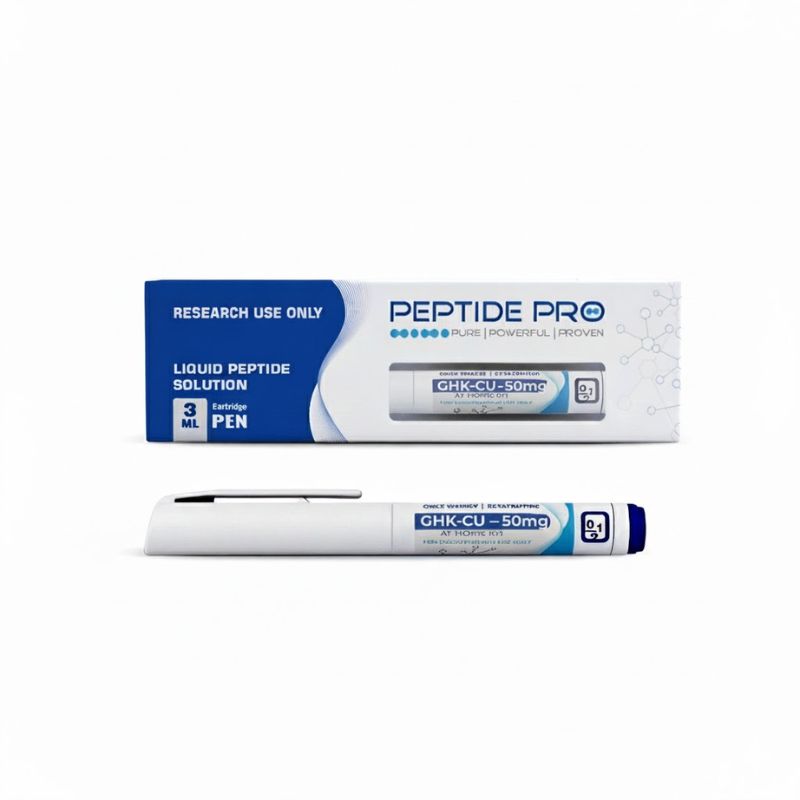
| Product Name | GHK-Cu (Copper Tripeptide-1) |
| Quantity | 50mg (Total Active API) |
| Formulation | Sterile Lyophilised Solution in Bacteriostatic Water |
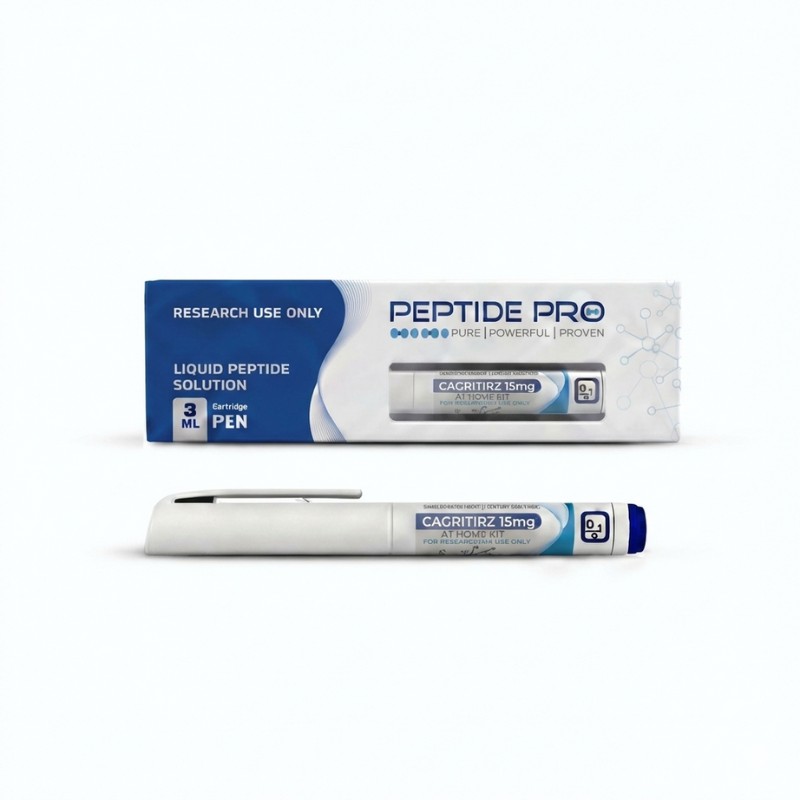
| Delivery Method | 3ml Precision Reconstituted Pen |
| CAS Number | 49557-75-7 |
| Molecular Formula | $C_{14}H_{24}CuN_{6}O_{4}$ |
| Molecular Weight | $\approx 404.91 \text{ g/mol}$ |
| Purity | >99% (HPLC Analysis) |
£109.00
Abstract The GHK-Cu 50mg peptide pen features a purified solution of the copper-binding tripeptide Glycyl-L-Histidyl-L-Lysine. Naturally present in human plasma, saliva, and urine, GHK-Cu functions as a critical “matrikine”—a peptide fragment that facilitates extracellular matrix (ECM) turnover and tissue repair. This 50mg formulation provides an optimised concentration for direct experimental application, balancing high potency with volumetric precision. It is the reagent of choice for research into wound healing dynamics, collagen synthesis regulation, and the modulation of oxidative stress in dermal and connective tissue models.
Primary Biological Pathway: Collagen and Decorin Synthesis The central mechanism of GHK-Cu is its ability to upregulate the expression of structural proteins. It stimulates fibroblasts to synthesise Collagen Type I and III, elastin, and glycosaminoglycans like decorin (a proteoglycan involved in collagen fibrillogenesis). Research utilising the 50mg pen allows for dose-dependent studies to determine the optimal concentration required to maximise tensile strength in healing wounds without inducing fibrotic overgrowth (scarring).
Secondary Research Finding: Anti-Inflammatory and Antioxidant Defence GHK-Cu is a potent modulator of the inflammatory response. It suppresses the production of pro-inflammatory cytokines (such as TNF-α and IL-6) and inhibits the release of iron from ferritin, thereby preventing iron-catalysed lipid peroxidation. The 50mg formulation is utilised in models of acute tissue injury to measure the preservation of antioxidant enzyme activity, specifically Superoxide Dismutase (SOD), which requires copper as a cofactor.
Tertiary Research Finding: Stem Cell Maintenance Recent investigations highlight GHK-Cu’s role in maintaining the proliferative potential of basal keratinocytes. It appears to modulate the p63 integrin pathway, preserving the “stemness” of epidermal cells and delaying replicative senescence. Researchers use the 50mg pen to treat ageing cell lines, quantifying markers of cellular vitality and the reversal of the senescence-associated secretory phenotype (SASP).
Long-term Genomic and Safety Observations Genomic profiling studies (Broad Institute Connectivity Map) suggest that GHK-Cu is capable of resetting the gene expression of diseased cells to a healthier state. Long-term studies utilising the 50mg dose investigate this “re-programming” effect, specifically monitoring genes involved in DNA repair and the ubiquitin-proteasome system to understand how the peptide combats the accumulation of cellular damage associated with ageing.
Purity: Validated at >99+% via High-Performance Liquid Chromatography (HPLC). The precise 1:1 stoichiometry of the copper-peptide complex is verified to ensure maximal bioavailability and prevent cytotoxicity associated with free copper ions.
Appearance: The 3ml pen contains a distinct blue, sterile liquid, indicative of the active Copper(II) coordination complex.
Precision: The pen delivery system ensures accurate volumetric dosing. The 50mg concentration is ideal for preparing standard experimental dilutions (e.g., 0.5% to 2%) without the need for complex weighing procedures.
Storage: The product must be stored at 2∘C to 8∘C.
Refrigeration and Shelf Life The GHK-Cu 50mg Pen contains a stable chelated complex but requires refrigeration (2∘C to 8∘C). The shelf life is 12 months in the sealed state. Once the pen is accessed, the bacteriostatic environment preserves the solution for 28 days. Researchers should ensure the pen cap is tightly secured to prevent evaporation, which could alter the molarity of the solution.
Shipping Stability We utilise medical-grade thermal packaging. The peptide is stable for up to 72 hours at ambient UK temperatures. However, to maintain the optimal coordination geometry of the complex, we recommend selecting the fastest available shipping option.
Freezing Warning Do not freeze. Freezing can disrupt the copper-peptide bond. Upon thawing, the solution may exhibit precipitation or a colour shift (fading blue), indicating the dissociation of copper ions. A frozen pen should be considered chemically compromised and discarded.
The GHK-Cu 50mg Pen is the definitive tool for Tissue Engineering and Repair Research. Handling hygroscopic GHK-Cu powder is challenging and prone to weighing errors, which can lead to inconsistent experimental results.
Our 50mg pen provides a sterile, concentration-verified stock solution. It allows researchers to easily dispense precise aliquots for addition to culture media or topical formulations, ensuring reproducibility across multiple experimental replicates.
For researchers investigating related regenerative pathways, we recommend examining:
BPC-157 10mg: (For comparative studies on angiogenesis and soft tissue healing).
TB-500 10mg: (For research into actin-mediated cell migration and repair).
This product is strictly for Research Use Only (RUO). It is not intended for human consumption, injection (e.g., for cosmetic skin rejuvenation), therapeutic use, or diagnostic procedures. The information provided is for educational and scientific reference only. Purchase is restricted to verified research institutions and qualified individuals. Any evidence of intended misuse for human application will result in immediate order cancellation and blacklisting, in compliance with UK research chemical regulations.
Explore our high-purity compounds — including Retatide (Retatrutide 30 mg), Semaglutide, and more.
Fast UK shipping. Lab-tested quality. Strictly for research use only.