
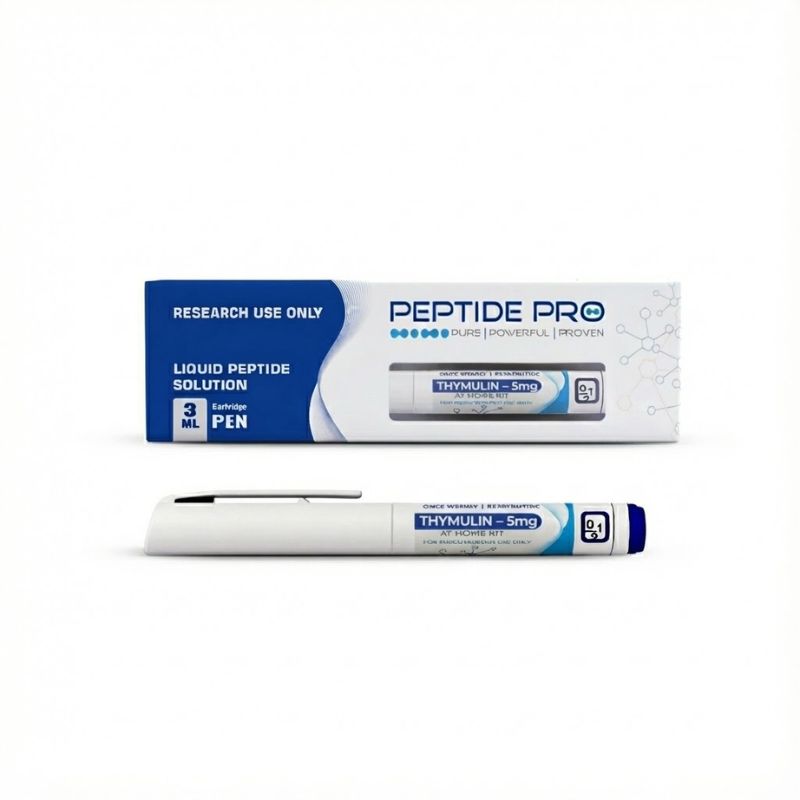
| Specification | Detail |
| Category | Immunology & Neuroendocrine Research |
| Product Name | Thymulin (Zinc-Facteur Thymique Sérique) |
| Quantity | 5mg (Total Active Zn-FTS Complex) |
| Formulation | Sterile Lyophilised Solution in Bacteriostatic Water |
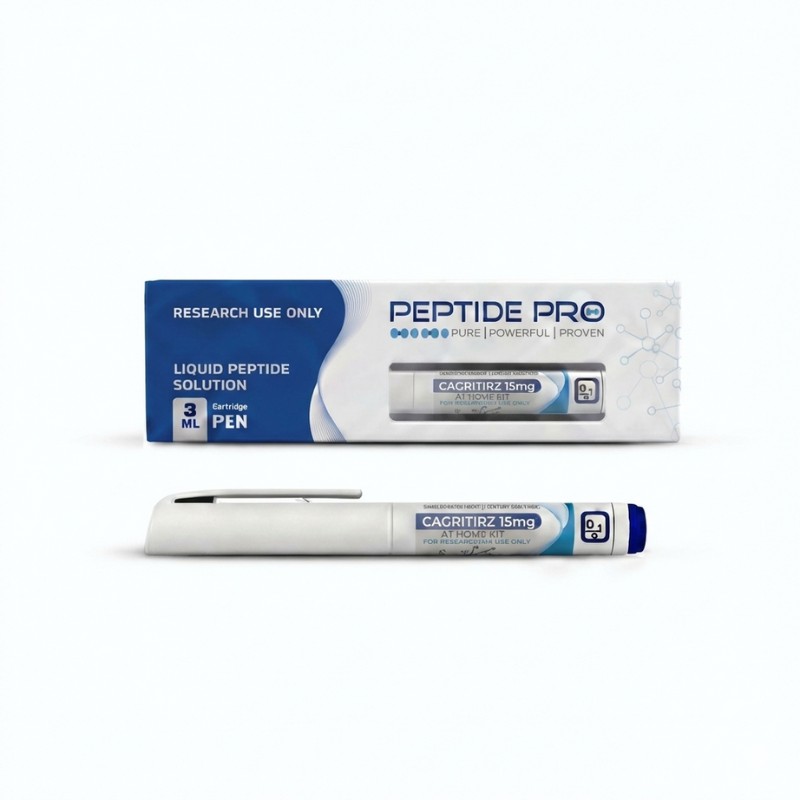
| Delivery Method | 3ml Precision Reconstituted Pen |
| CAS Number | 63958-90-7 (FTS sequence) / 75640-39-2 (Zn Complex) |
| Molecular Formula | $C_{33}H_{54}N_{12}O_{15} \cdot Zn^{2+}$ |
| Molecular Weight | $\approx 858.9 \text{ g/mol}$ (Peptide Base) + Zinc Ion |
| Purity | >98% (HPLC Analysis) |
£99.00
Primary Biological Pathway: T-Cell Receptor Induction The core research utility of Thymulin 5mg lies in its ability to induce the expression of T-cell surface markers (such as Thy-1, CD3, and CD4) on immature precursor cells. This induction is strictly zinc-dependent. The 5mg format is particularly useful for in vitro assays or small-animal models where the investigation focuses on the kinetics of T-cell lineage commitment. Research aims to delineate how Thymulin activates the adenylate cyclase system to boost cyclic AMP (cAMP) levels, thereby triggering the differentiation of null cells into functional immunocytes.
Secondary Research Finding: Neurogenic Inflammation Control Thymulin acts as a potent dual-regulator at the interface of the nervous and immune systems. In models of neurogenic inflammation, low-dose Thymulin has been observed to inhibit the release of sensory neuropeptides (like CGRP and Substance P) from afferent nerve terminals. Researchers use the 5mg pen to study this analgesic pathway, specifically testing the hypothesis that Thymulin acts as an endogenous “off-switch” for cytokine-induced hyperalgesia during the resolution phase of inflammation.
Tertiary Research Finding: Metabolic and Hormonal Interactions Beyond immunity, Thymulin levels are intrinsically linked to metabolic status, often decreasing during states of malnutrition or anorexia nervosa. The 5mg formulation allows for the precise supplementation needed to study the “rescue” of immune function in energy-restricted models. Furthermore, studies are examining the interplay between Thymulin and thyroid hormones, as triiodothyronine (T3) is a known upregulator of Thymulin secretion.
Long-term Genomic and Safety Observations While Thymulin is an endogenous peptide, its exogenous application is subject to rigorous safety profiling. Current research focuses on the “hormetic” zone—the specific dose range where the peptide is beneficial versus inhibitory. Genomic analysis of lymphoid tissue is being conducted to ensure that 5mg equivalent doses stimulate the transcription of interleukin receptors (IL−2R) without inducing autoimmune cross-reactivity or desensitising the target receptors on T-cells.
Purity: Validated at >98% via High-Performance Liquid Chromatography (HPLC). The presence of the zinc ion is confirmed via atomic absorption spectroscopy to guarantee biological activity.
Appearance: The 3ml pen contains a clear, colourless, sterile liquid.
Precision: The pen ratchet mechanism allows for the delivery of micro-quantities. This is vital for Thymulin research, where efficacy often peaks at picomolar plasma concentrations.
Storage: The product must be maintained at 2∘C to 8∘C.
Refrigeration and Shelf Life The Thymulin 5mg Pen is a chelated metallopeptide complex. It requires strict refrigeration (2∘C to 8∘C). The shelf life is 12 months sealed. Once the pen is opened, the solution is stable for approximately 28 days. However, due to the lower total mass of peptide in the 5mg format, we recommend consuming the reagent within 21 days to minimise the risk of oxidation affecting the zinc-binding site.
Shipping Stability This product is shipped in medical-grade thermal packaging. It is stable for up to 72 hours at ambient UK temperatures. Nevertheless, the coordinate bond between the zinc and the nonapeptide is sensitive to thermal shock; we strongly recommend “Next Day” delivery options to ensure the reagent arrives in optimal condition.
Freezing Warning Strictly avoid freezing. Freezing the solution can irreversibly disrupt the zinc-peptide complex. If the zinc ion dissociates, the remaining FTS peptide becomes biologically inert. A frozen pen will likely yield negative results in T-cell rosette formation assays and should be discarded.
The Thymulin 5mg Pen is the standard format for Pilot Studies and Dose-Response Optimisation. Thymulin exhibits a classic bell-shaped dose-response curve; more is not always better. In fact, supraphysiological doses can sometimes inhibit the very immune functions researchers aim to stimulate.
The 5mg pen provides a smaller total quantity, ideal for verifying the “active window” of dosage in a new experimental model without the waste associated with larger pens. It ensures that researchers can work with fresh, fully active zinc-complexed peptide for every trial.
For researchers conducting comparative neuro-immune studies, we recommend referencing:
Thymulin 10mg: https://www.peptidepro.co.uk/product/thymulin-10mg/ (For larger cohorts).
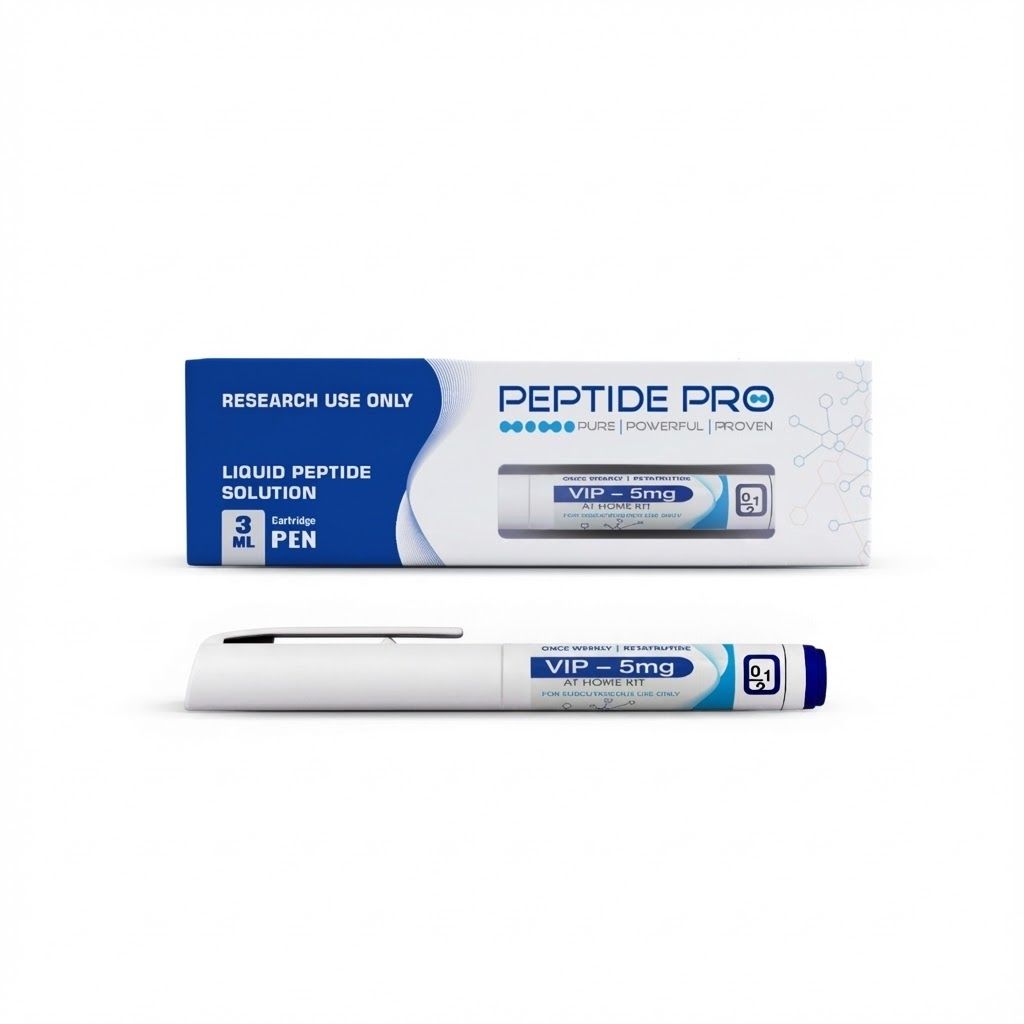
VIP 5mg: https://www.peptidepro.co.uk/product/vip-5mg/ (For comparative studies on anti-inflammatory neuropeptides).
This product is strictly for Research Use Only (RUO). It is not intended for human consumption, injection, therapeutic use (e.g., for autoimmune disorders), or diagnostic procedures. The information provided is for educational and scientific reference only. Purchase is restricted to verified research institutions and qualified individuals. Any evidence of intended misuse for human application will result in immediate order cancellation and blacklisting, in compliance with UK research chemical regulations.
Explore our high-purity compounds — including Retatide (Retatrutide 30 mg), Semaglutide, and more.
Fast UK shipping. Lab-tested quality. Strictly for research use only.